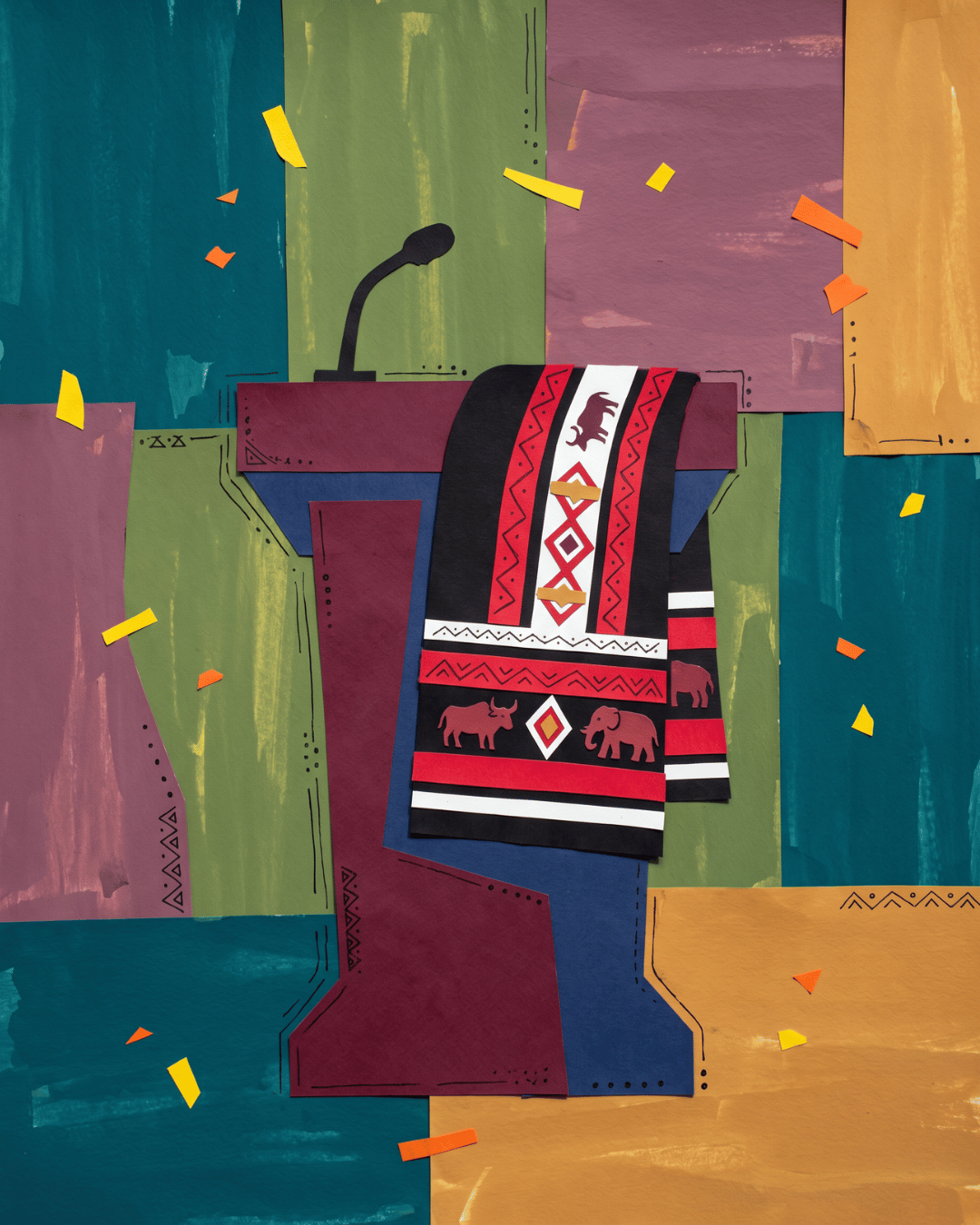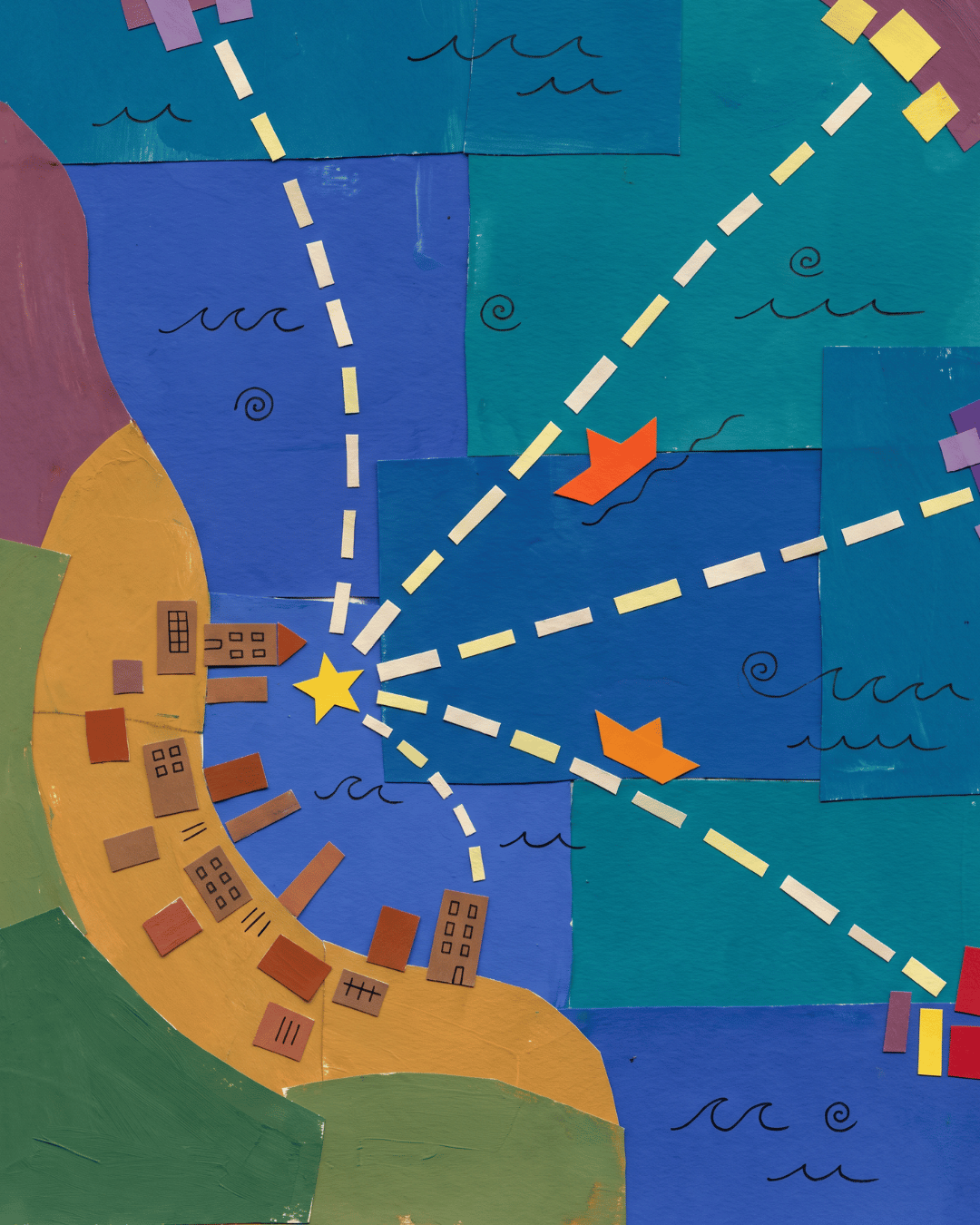

Long before diplomacy became associated with embassies, foreign ministries and seats in international organizations, the question of who could speak on behalf of Somaliland was rooted in the community itself. For generations, traditional elders played a central role in representing their communities, negotiating agreements, resolving disputes and engaging with external actors. Authority was exercised through relationships, customary institutions and the trust placed in those who carried the interests of their people. Even under British colonial rule, traditional social and political structures remained an important part of how communities in what is now Somaliland were organized and represented.
This history offers an important starting point for understanding Somaliland's experience of diplomacy today. It challenges the assumption that diplomacy begins only when a community becomes a recognized state. Representation existed before formal diplomatic recognition, just as negotiation existed before embassies. What changed over time was not simply the need to represent Somaliland, but the spaces in which that representation had to take place and the actors who were expected to carry its voice.
Somaliland therefore provides a useful case study of how a community operating outside the conventional international system of recognition creates diplomatic space for itself.
Its experience is not simply a history of seeking recognition. It is also a history of finding ways to participate in political, economic and international affairs despite the limitations imposed by its position within the international system. Since declaring the restoration of its independence in 1991, Somaliland has built its own political institutions and developed channels of engagement with governments, international organizations, businesses and civil society actors.
The central challenge has therefore been one of representation: how can a community speak for itself when the international system does not fully recognize its right to occupy the same diplomatic spaces as recognized states? Somaliland's response has been to create and use alternative channels of engagement. Representative offices, political dialogue, international advocacy, development partnerships, economic relationships and participation in international forums have all provided avenues through which Somaliland has sought to present its interests and make its voice heard.
This has also expanded the meaning of diplomacy. In Somaliland's case, diplomacy is not limited to the pursuit of formal recognition. It can also mean building relationships, negotiating partnerships, attracting investment, engaging regional actors and creating opportunities for the community to participate in decisions that affect its political and economic future. In this sense, diplomacy becomes not only an instrument of states, but also a means through which a community seeks to create political and economic space for itself.
The question of participation is equally important. Who speaks for Somaliland? Is representation limited to government officials and diplomats, or does it also include traditional leaders, civil society, young people, women, businesses, academics and members of the diaspora? And when these actors engage with the outside world, are they simply advocating for Somaliland, or are they participating in diplomacy in their own right?
This article explores Somaliland through these questions. It examines how representation has evolved, how diplomatic space has been created despite limited international recognition, and how political, economic and societal actors have contributed to Somaliland's engagement with the wider world. Somaliland's experience ultimately raises a broader question for unrepresented communities everywhere: if having a seat at the table determines who is heard, what forms of diplomacy can communities create when they have not yet been given that seat?
From Traditional Representation to Modern Diplomacy
To understand Somaliland's experience of diplomacy, it is necessary to begin with how representation functioned before the emergence of modern state institutions. For much of the history of the communities inhabiting what is now Somaliland, political authority was not concentrated in a central government. Communities were organized through clan-based social structures in which traditional elders played a central role in representing collective interests at the community level. They negotiated agreements, mediated disputes, maintained relationships between communities and, importantly, engaged with external actors on matters affecting their people.
This form of representation was not diplomacy in the contemporary institutional sense. There were no foreign ministries, embassies or permanent diplomatic missions through which communities conducted international relations. Yet the underlying principle was familiar: someone had to speak, negotiate and make commitments on behalf of a wider community. Traditional elders performed many of these functions through customary institutions and systems of consultation. Their authority was derived largely from the communities they represented, making representation a social and political responsibility rather than simply an official title.
This became particularly significant when European colonial powers began expanding their presence in the Horn of Africa during the nineteenth century. British engagement with Somaliland was not conducted in a political vacuum. Agreements were negotiated with local communities and their representatives, and traditional authorities remained important intermediaries between external powers and the communities whose interests were at stake. The agreements concluded between British authorities and Somaliland's traditional leaders during the 1880s therefore provide an early example of a question that continues to shape Somaliland's diplomatic experience: who has the authority to speak for a people, and from where does that authority come?
The importance of these arrangements lies not simply in their colonial history, but in what they reveal about representation. Somaliland communities were not passive objects of external diplomacy. They had representatives who negotiated, made demands and sought to protect the interests of their communities. The relationship was unequal, particularly within the wider context of European colonial expansion, but the existence of negotiation demonstrates that political representation and engagement with external powers were already part of the region's political experience.
Over time, the institutions through which Somaliland was represented changed. The development of colonial administration introduced new forms of political authority, while the emergence of modern nationalism increasingly connected local communities to broader ideas of territory, sovereignty and self-government. By the time Somaliland gained independence from Britain in 1960, representation had moved beyond purely customary structures towards modern state institutions.
Yet the underlying question remained remarkably consistent: who speaks for Somaliland?
The answer increasingly became the state and its formal institutions. Foreign relations were no longer conducted primarily through traditional elders acting on behalf of individual communities, but through governments, political leaders and officials operating within an international system increasingly organized around sovereign states. This transition marked an important shift from traditional forms of representation to modern diplomacy.
However, Somaliland's later experience would demonstrate that the creation of state institutions does not automatically guarantee a place within the international diplomatic system. After declaring the restoration of its independence in 1991, Somaliland rebuilt its political institutions and began engaging externally as a self-governing polity, but without broad international recognition. It therefore found itself in an unusual position: it had institutions capable of representing its people, but lacked the full diplomatic status normally associated with state representation.
This tension between having the capacity to represent oneself and being formally recognized as having the right to do so would become central to Somaliland's diplomatic experience. It is from this point that Somaliland's story becomes particularly relevant to the wider question of representation and participation: when the international system does not provide a recognized seat at the table, communities must find other ways to create one.
Creating Diplomatic Space Without Broad Recognition
When Somaliland restored its independence in 1991, it entered an international system whose rules of representation were largely built around recognized states. Somaliland had its own government, territory, institutions and population, but it lacked the broad international recognition that normally provides a state with access to formal diplomatic relations, membership in international organizations and a conventional network of embassies. This created a fundamental dilemma: Somaliland could establish institutions capable of representing its people internally, but it could not automatically claim the same diplomatic space internationally.
Rather than allowing the absence of broad formal recognition to determine the limits of its external engagement, Somaliland developed alternative channels through which it could communicate its interests and build relationships. Representative offices became an important part of this approach. These offices did not carry the same legal status as embassies, but they enabled Somaliland to maintain sustained engagement with governments, policymakers, businesses, civil society and international organizations.
Where the international system did not provide Somaliland with conventional diplomatic infrastructure, Somaliland sought to construct its own channels of representation.
This distinction between an embassy and a representative office is more than a question of terminology. It reflects the wider problem faced by communities that possess functioning political institutions but lack full international recognition. A representative office can communicate, advocate, build relationships and facilitate cooperation, but it operates within a different diplomatic space from that of a formally recognized state. Somaliland's experience therefore demonstrates that participation can exist on a spectrum: a community may not possess all the rights and privileges of a recognized state while still developing meaningful relationships with external actors.
The result has been a form of diplomacy that is often less formal, but not necessarily less consequential. Somaliland has used political dialogue, international conferences, development cooperation, economic engagement and bilateral relationships to establish channels through which its priorities can be communicated. Its overseas representation has developed over time, reflecting an effort to maintain international relationships despite the limitations associated with its status.
This approach also changes the way diplomacy itself can be understood. If diplomacy is defined only by formal recognition, then Somaliland's activities outside that framework may be dismissed as advocacy rather than diplomacy. But if diplomacy is understood more broadly as the practice of representation, negotiation, relationship-building and the pursuit of shared interests, Somaliland's experience becomes much more significant. Its representatives have had to perform many of the functions associated with diplomacy while operating without the full institutional privileges normally available to recognized states.
The challenge, however, has never been simply to make Somaliland visible. Visibility alone does not amount to participation. The more difficult task has been to transform access into influence: to persuade external actors to engage with Somaliland, to establish relationships that produce practical outcomes, and to ensure that Somaliland's own priorities are part of conversations affecting the region.
This is where Somaliland's diplomatic experience moves beyond the question of recognition. The creation of diplomatic space has enabled Somaliland to pursue interests in areas ranging from development and trade to security and investment. Relationships with external partners have provided opportunities to negotiate cooperation even where formal diplomatic recognition was absent. In this sense, Somaliland's diplomacy has often been pragmatic: rather than waiting for the international system to create a space for it, Somaliland has attempted to create relationships through which that space could gradually expand.
The experience also reveals the limits of diplomacy without broad recognition. A representative office cannot automatically provide the legal privileges of an embassy. Participation in international meetings does not necessarily provide a vote. Engagement with foreign governments does not necessarily result in formal diplomatic relations. And being heard by individual international actors is not the same as having an institutional voice within the international system.
Yet these limitations do not make the diplomatic effort meaningless. They make the question of representation more important. Somaliland's experience demonstrates that participation can precede broad recognition. A community can build relationships, negotiate, advocate and cooperate internationally before it acquires the full status that would normally make those activities easier.
This is perhaps the most important lesson of Somaliland's diplomatic experience: representation is not always something granted by the international system. Sometimes it is something a community builds through sustained engagement. The diplomatic space Somaliland has created has therefore been shaped not only by governments and official representatives, but also by the economic, social and political relationships that connect Somaliland to the wider world.
When Diplomatic Space Creates Economic Opportunity
The creation of diplomatic space has consequences beyond political representation. For Somaliland, one of the clearest examples is the relationship it developed with the United Arab Emirates and the subsequent transformation of Berbera Port. The significance of this relationship lies not simply in the scale of the investment that followed, but in what it demonstrates about the connection between representation, diplomacy and economic opportunity.
In the absence of conventional diplomatic relations, Somaliland has relied on alternative channels of engagement to develop relationships with governments, businesses and other international actors. The United Arab Emirates became an important example of this approach. Somaliland maintained representation in the UAE and used its presence there to engage with one of the region's important political and commercial centers. This created a channel through which Somaliland could present its interests, develop relationships and pursue economic opportunities beyond what might have been possible through formal diplomatic recognition alone.
The development of Berbera Port illustrates how such relationships can move from diplomatic engagement to practical economic cooperation. In 2016, Somaliland and DP World reached an agreement for the development of Berbera Port, leading to a long-term concession and a major investment programme to expand and modernize the port. DP World committed up to US$442 million to the development and expansion of the port under a 30-year concession. The project was designed to strengthen Berbera's position as a regional trade and logistics hub and to improve its connection with markets in the Horn of Africa.
The importance of the agreement was therefore larger than the financial figure attached to it. For Somaliland, the Berbera project demonstrated that diplomatic engagement could produce tangible outcomes even without the conventional privileges of state-to-state diplomacy. A relationship developed through political and economic channels resulted in one of the most significant foreign investment projects in Somaliland's modern history.
Berbera also illustrates an important characteristic of Somaliland's approach to diplomacy: economic interests can create diplomatic space just as political relationships can create economic opportunity. Somaliland's geographic position on the Gulf of Aden, its proximity to Ethiopia and its potential role as a trade gateway gave it strategic value to external partners. At the same time, international investment provided Somaliland with an opportunity to demonstrate that it could negotiate, implement and manage complex economic partnerships.
The port project was not conceived simply as an infrastructure investment. It was connected to a wider regional vision. DP World has described Berbera as an additional gateway to the Red Sea and the Horn of Africa, while the wider development has included a free zone and improved connectivity with Ethiopia. This transformed Berbera from a national infrastructure project into part of a wider regional economic network.
This is where the idea of economic diplomacy becomes particularly relevant. Diplomacy is often understood through political negotiations, official visits and discussions between governments. Yet for communities seeking greater participation in international affairs, economic relationships can become equally important diplomatic instruments. Investment agreements, infrastructure partnerships, trade corridors and commercial relationships can establish long-term connections that create new forms of international engagement.
Somaliland's experience with Berbera therefore raises a broader question about representation. If an entity without broad international recognition can negotiate a major international investment, establish a long-term commercial partnership and become part of regional trade infrastructure, what does this tell us about the nature of participation in international affairs?
It suggests that participation is not always binary. A community does not necessarily move directly from exclusion to full inclusion. There can be intermediate spaces in which it engages with international actors, negotiates agreements and develops partnerships without possessing all the formal rights of a recognized state. Somaliland's relationship with the UAE and DP World is one example of such a space.
At the same time, this form of diplomacy has its limitations. Economic engagement does not automatically translate into political recognition, and investment does not remove the institutional barriers created by Somaliland's international status. The Berbera experience therefore should not be presented simply as evidence that diplomacy has “solved” Somaliland's recognition problem. Rather, it demonstrates something more nuanced: diplomatic engagement can generate practical forms of participation even when formal political recognition remains incomplete.
For Somaliland, this distinction matters. The objective of creating diplomatic space is not only to persuade others to recognize its political position. It is also to ensure that Somaliland has the ability to negotiate its own economic interests, attract partnerships and participate in decisions concerning its future. In this sense, the development of Berbera Port represents more than an investment project. It is an example of how representation can become participation, and how participation can produce concrete outcomes for a community operating outside the conventional diplomatic system.
Beyond Governments: Diplomacy as Community Participation
Diplomatic representation is not carried by governments alone. For communities whose international participation has historically been constrained, individuals and institutions outside government can become important channels through which their voices reach the wider world. Somaliland's experience reflects this broader understanding of diplomacy, where traditional leaders, civil society organizations, women, young people, businesses, academics and members of the diaspora all contribute, in different ways, to how Somaliland is understood and represented internationally.
Young people in particular have increasingly become part of this process. Through international conferences, youth networks, civil society initiatives, academic exchanges and professional relationships, Somaliland's younger generation has created opportunities to engage directly with people and institutions beyond its borders. These forms of engagement may not carry the formal title of diplomacy, but they perform an important diplomatic function: they build relationships, challenge misconceptions and allow members of the community to explain their own experiences rather than having those experiences defined entirely by others.
The same applies to the diaspora and private sector. Somalilanders living abroad often act as informal bridges between Somaliland and the countries in which they live, while businesses create commercial relationships that connect Somaliland to regional and international markets. Civil society organizations similarly provide platforms for advocacy and participation in international discussions. Women and young people can also bring perspectives that may otherwise remain underrepresented in formal diplomatic spaces.
This broader participation raises an important distinction between being represented and representing oneself. A community may be represented in international forums without having meaningful control over how it is represented. Being spoken about is not the same as speaking for oneself. For Somaliland, therefore, participation is not simply about gaining access to international spaces; it is also about creating opportunities for Somalilanders themselves to articulate their experiences, interests and aspirations within those spaces.
In this sense, diplomacy becomes a collective process. Government representatives may negotiate at the official level, but the credibility and reach of a community's international voice can also depend on the relationships built by its people. The diplomatic space Somaliland has created is therefore not owned by a single institution. It is sustained by a wider network of actors who, formally or informally, contribute to making Somaliland visible, understood and heard.
Recognition Changes the Question, Not the Need to Be Heard
For decades, Somaliland's diplomatic engagement took place largely without the formal recognition that normally gives a state access to the full architecture of international diplomacy. The diplomatic landscape changed significantly on 26 December 2025, when Israel became the first United Nations member state to formally recognize Somaliland as an independent state. This marked an important development in Somaliland's long effort to establish itself as an international actor and demonstrated that sustained diplomatic engagement can eventually produce a change in formal political relationships.
Yet recognition should not be understood as the point at which Somaliland's diplomacy begins, nor necessarily as the point at which its struggle to be heard ends. The decades preceding Israel's recognition had already demonstrated that Somaliland could build relationships, negotiate partnerships and participate in international affairs without broad international recognition. Recognition changes the nature of that participation, but it does not erase the diplomatic work that made such participation possible in the first place.
The significance of recognition therefore extends beyond the legal or political status it provides. Recognition can strengthen a community's ability to participate in formal international institutions, establish conventional diplomatic relations and negotiate with other states on a more equal institutional footing. It can transform the question from “Who is allowed to speak?” to “How will that voice now be heard within the international system?”
At the same time, the development also illustrates that representation and recognition are not identical. A community can represent itself before it is formally recognized, just as formal recognition does not automatically guarantee that every member of that community will be equally represented. The question of who speaks for Somaliland therefore remains relevant even as its international position evolves.
This is particularly important for understanding diplomacy as participation. Somaliland's experience shows that diplomatic space can be built incrementally: through relationships, representative institutions, economic partnerships, international engagement and the participation of people beyond government. Formal recognition may expand that space, but it does not create the underlying capacity for representation from nothing.
The broader lesson is therefore not simply that Somaliland achieved a diplomatic breakthrough. It is that recognition and participation can reinforce one another, but they are not the same thing. Recognition can provide access to spaces from which a community was previously excluded; participation is what allows that community to use those spaces to articulate its own interests.
For Somaliland, the next question is consequently not only whether it will be recognized more widely, but how it will use the diplomatic space it has spent decades creating. The experience raises a question relevant far beyond Somaliland: when a community finally gains greater access to the international table, how does it ensure that the voice reaching that table genuinely reflects the people it claims to represent?
A Voice at the Table
The question of who represents Somaliland has never had a single answer. From traditional elders who negotiated on behalf of their communities, to the institutions of the modern state, and increasingly to young people, women, civil society, businesses and the diaspora, the ways in which Somaliland is represented have evolved with its political and international circumstances. What has remained constant is the desire to speak for oneself rather than have one's future determined by others.
Somaliland's experience demonstrates that diplomacy does not necessarily begin with a flag, an embassy or a seat at the United Nations. It can begin with a conversation, a relationship, a negotiation or a community's determination to make itself heard. Over time, those individual efforts can develop into representative offices, political partnerships, economic agreements and wider forms of international participation.
This is what makes Somaliland relevant to the broader conversation about diplomacy, representation and participation. Its experience shows that a community that lacks broad international recognition is not necessarily an absent community. It can create diplomatic space even when the international system does not fully provide it with one. The development of relationships with external partners, the investment in Berbera, the participation of its citizens in international spaces and the evolution of its diplomatic institutions all demonstrate different ways in which a community can move from being the subject of international discussion to becoming an actor within it.
The recognition of Somaliland by Israel in December 2025 represents an important development in that journey, but it should be understood as part of a much longer process rather than its beginning or its final destination. Recognition can open doors to greater formal participation, but meaningful representation ultimately depends on what happens beyond those doors: who is invited to speak, whose experiences are heard, and whether communities have the ability to shape the decisions that affect them.
Perhaps this is the most important lesson Somaliland's experience offers. Representation is not simply having someone speak about you; it is having the ability to speak for yourself. Participation is not simply being present in the room; it is having the opportunity to influence what happens in it.
For communities that remain outside, or only partially within, the structures of international diplomacy, the challenge is therefore not only to seek a seat at the table. It is to build the relationships, institutions and voices that make that seat meaningful when it comes.
Somaliland's diplomatic journey is, ultimately, a story of creating that space - one relationship, one negotiation and one voice at a time.
About the Author
Khadan Siyaad holds a Bachelor's degree in Business Administration and is the Chairperson of the Somaliland Youth Ambassadors Council (SOYAC), a youth-led platform dedicated to promoting diplomacy, civic engagement, leadership, and international cooperation.