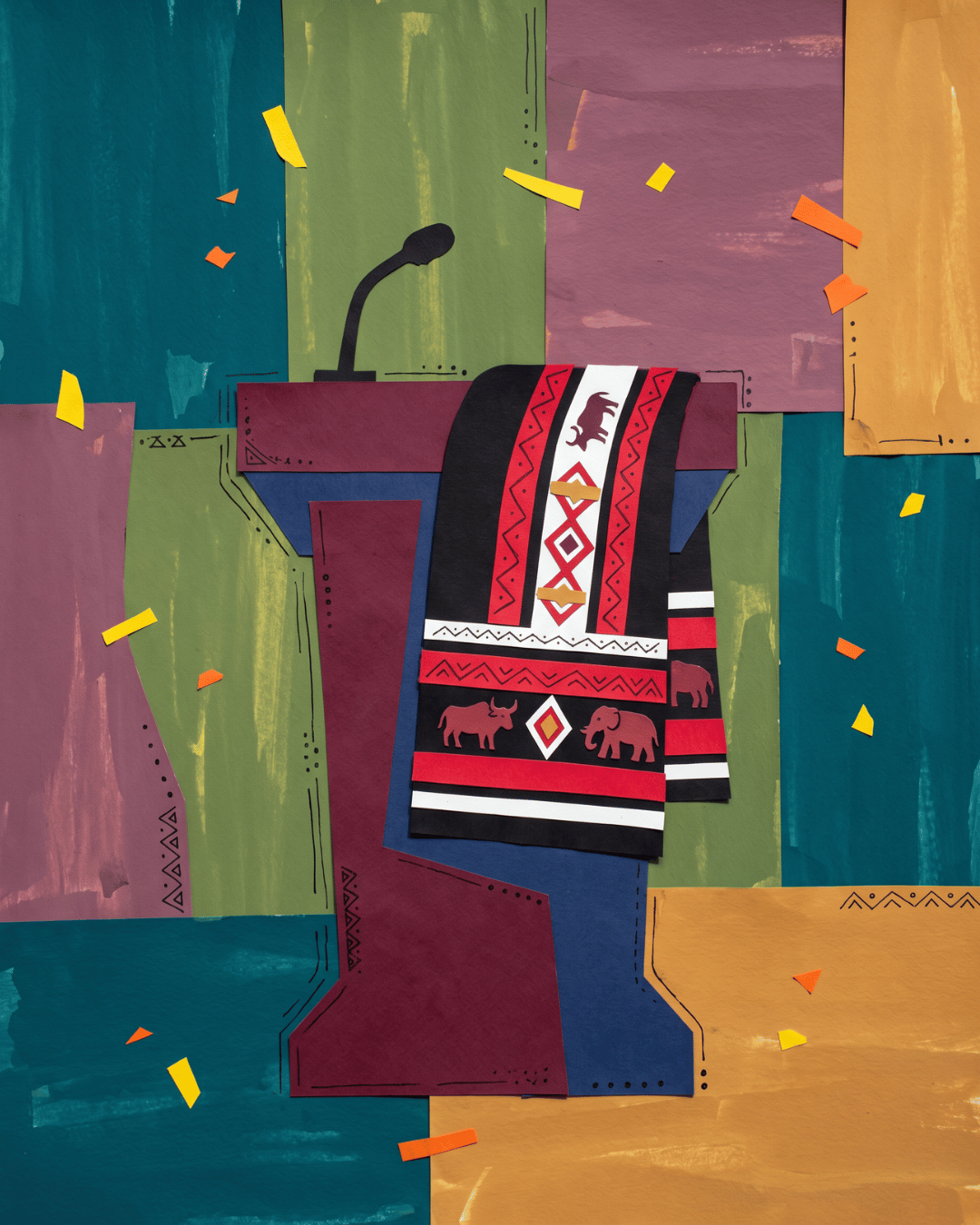

Diplomacy is often imagined as a conversation among states: flags behind polished desks, ambassadors exchanging notes, ministers negotiating communiqués, and international institutions translating political disagreements into the language of procedure. But this familiar image conceals a fundamental question: who gets to speak when the people most affected by a decision are not represented at the table?
For the Baloch, this is not an abstract question of diplomatic theory. It is a question of political existence.
Balochistan occupies a paradoxical position in international affairs. It is territorially indispensable to Pakistan's strategic imagination, home to Gwadar, rich mineral resources and a coastline of considerable geopolitical significance yet the Baloch themselves have frequently experienced strategic decision-making as something done to them rather than with them. Development projects, security policies, resource arrangements and counterterrorism measures have profoundly altered their lives while meaningful participation in determining those policies has remained contested.
This makes the Baloch case particularly revealing for understanding diplomacy in the twenty-first century: representation cannot be reduced to the presence of a state in a room. A state may possess diplomatic recognition without necessarily exhausting the political voices within its territory.
The distinction matters.
Pakistan represents itself internationally as the sovereign authority over Balochistan. Yet sovereignty and representation are not synonymous. A government may speak legally on behalf of a territory while significant sections of the population question whether it speaks politically for them. The gap between these two forms of representation is where much of the contemporary Baloch diplomatic struggle resides.
For decades, Baloch human-rights organisations have documented enforced disappearances, extrajudicial killings, arbitrary detention and restrictions on peaceful activism. These concerns have also entered international human-rights mechanisms. A 2025 communication by UN special-procedure experts concerning Pakistan referred to allegations of arbitrary arrests, enforced disappearances, extrajudicial killings, excessive force against peaceful protesters and restrictions on Baloch activists and organisations. The United States Department of State has likewise documented allegations of enforced disappearances involving Baloch activists, nationalists and civil-society actors.

The significance of these allegations for diplomacy goes beyond human-rights reporting. They demonstrate how communities without conventional diplomatic power can attempt to internationalise questions that their own political systems have failed, or been unwilling, to resolve.
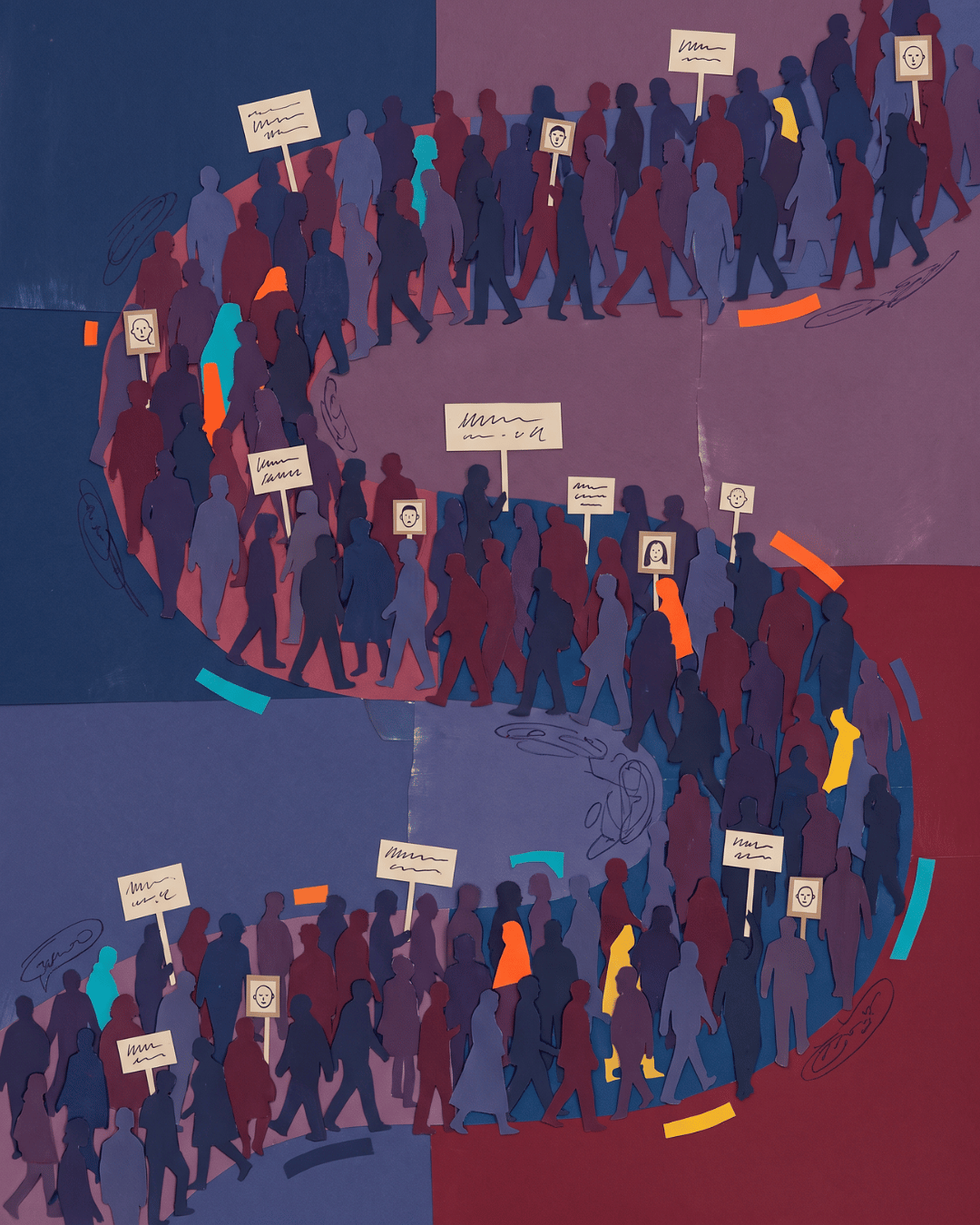
The Baloch have therefore developed forms of diplomacy that do not resemble conventional diplomacy. Families of disappeared persons, students, activists, lawyers, journalists and members of the diaspora have become political intermediaries. They carry testimonies from streets and homes into press conferences, parliaments, universities, international forums and human-rights institutions. Baloch organisations have submitted statements and participated in proceedings connected to the United Nations Human Rights Council, while activists have used international media and transnational civil-society networks to keep disappearances and political repression within the field of international attention.
This is diplomacy from below.
Its currency is not diplomatic immunity or a seat at the United Nations. It is testimony, documentation, advocacy and persistence.
Perhaps the most powerful illustration is the political transformation of the families of the disappeared. A missing person is not simply an individual absence. His disappearance creates a diplomatic actor: a mother who demands answers, a daughter who carries a photograph, a sister who travels from protest to protest, a family that approaches journalists and international institutions because domestic mechanisms have failed to provide closure. Sammi Deen Baloch, whose father disappeared in 2009, has described how his disappearance transformed her childhood into years of activism and campaigning for the disappeared.
This matters because diplomacy is ultimately about whose experiences become legible to power.
The Baloch experience also exposes another weakness in conventional diplomacy: development is frequently treated as a substitute for participation. Gwadar is an important example. CPEC is routinely presented within the strategic vocabulary of connectivity, infrastructure and regional integration. Yet research examining local perspectives has found that many indigenous communities in Gwadar felt excluded from decision-making and believed the benefits of development had not adequately reached them. More recent research similarly identifies concerns over livelihoods, access to fishing waters and participation in development planning.
This raises an uncomfortable question for international diplomacy: Can a project genuinely be described as inclusive if the communities whose land, livelihoods and futures it transforms have little meaningful influence over its design?
Participation is not simply consultation after decisions have already been made. It is the capacity to shape the decision before it becomes policy.
This distinction is particularly important in resource politics. From Gwadar to mineral extraction, Balochistan's strategic importance has repeatedly attracted external interests. But if international partnerships engage primarily with the central state while treating local communities as stakeholders to be managed rather than political actors to be heard, diplomacy risks reproducing the very asymmetries that generate instability.
The answer is not to romanticise every actor who claims to speak for the Baloch. Representation itself must be interrogated. Who represents whom? Can an activist speak for an entire population? Does the diaspora represent those who remain in Balochistan? How should the voices of women, students, fishermen, tribal communities and displaced families enter international conversations? And how should legitimate civilian grievances be distinguished from the agendas of armed actors?
These questions do not weaken the case for Baloch participation. They strengthen it.
A mature diplomatic framework should recognise that communities are rarely politically homogeneous. The objective should therefore not be to find one authorised Baloch voice, but to create conditions in which multiple Baloch voices can be heard without fear.
That requires a broader conception of diplomacy, one that includes human-rights defenders, civil society, academics, diaspora networks, community representatives and families affected by state policy. It also requires international actors to treat consultation as more than a ceremonial exercise. Before supporting major infrastructure, investment or security arrangements, they should ask whether affected communities have had meaningful opportunities to consent, dissent and negotiate.
For the Baloch, participation is therefore not merely about acquiring a chair in an international conference room. It is about changing the architecture of decision-making itself.
The deeper lesson extends beyond Balochistan. In an era in which geopolitical decisions increasingly affect communities across bordersthrough infrastructure corridors, climate policies, migration regimes, resource extraction and security partnerships—the old state-centric model of diplomacy is becoming increasingly inadequate.
A treaty may be signed between two governments, but its consequences are lived by millions who never signed it.
That is why representation must precede legitimacy, and participation must accompany power.
For the Baloch, the struggle to be heard internationally is not an attempt to make diplomacy less orderly. It is an attempt to make diplomacy more honest. It asks the international system to look beyond the sovereign state as the sole unit of political voice and recognise that legitimacy can also emerge from those who experience the consequences of state decisions most directly.
The most important diplomatic question, then, may not be who sits at the table. It may be who has been left outside it and what would change if they were finally allowed to speak?
About the Author
Ambreen is a researcher, writer, and human rights advocate with a passion for social justice, art, and meaningful dialogue. As a Research Coordinator at Baloch Voice for Justice, Ambreen focuses on raising awareness about human rights issues, social developments, and the challenges faced by marginalized communities, particularly in Balochistan.
Ambreen's work is driven by a commitment to research, critical thinking, and public engagement, believing that informed discussion and accurate documentation are essential for promoting accountability and advancing human rights. Ambreen seeks to contribute thoughtful perspectives on society, culture, and the issues that shape people’s lives.
Proud of her Baloch heritage, she values the power of authentic storytelling to amplify overlooked voices and foster greater understanding. She is committed to using research and advocacy as tools to promote justice, dignity, and positive social change.