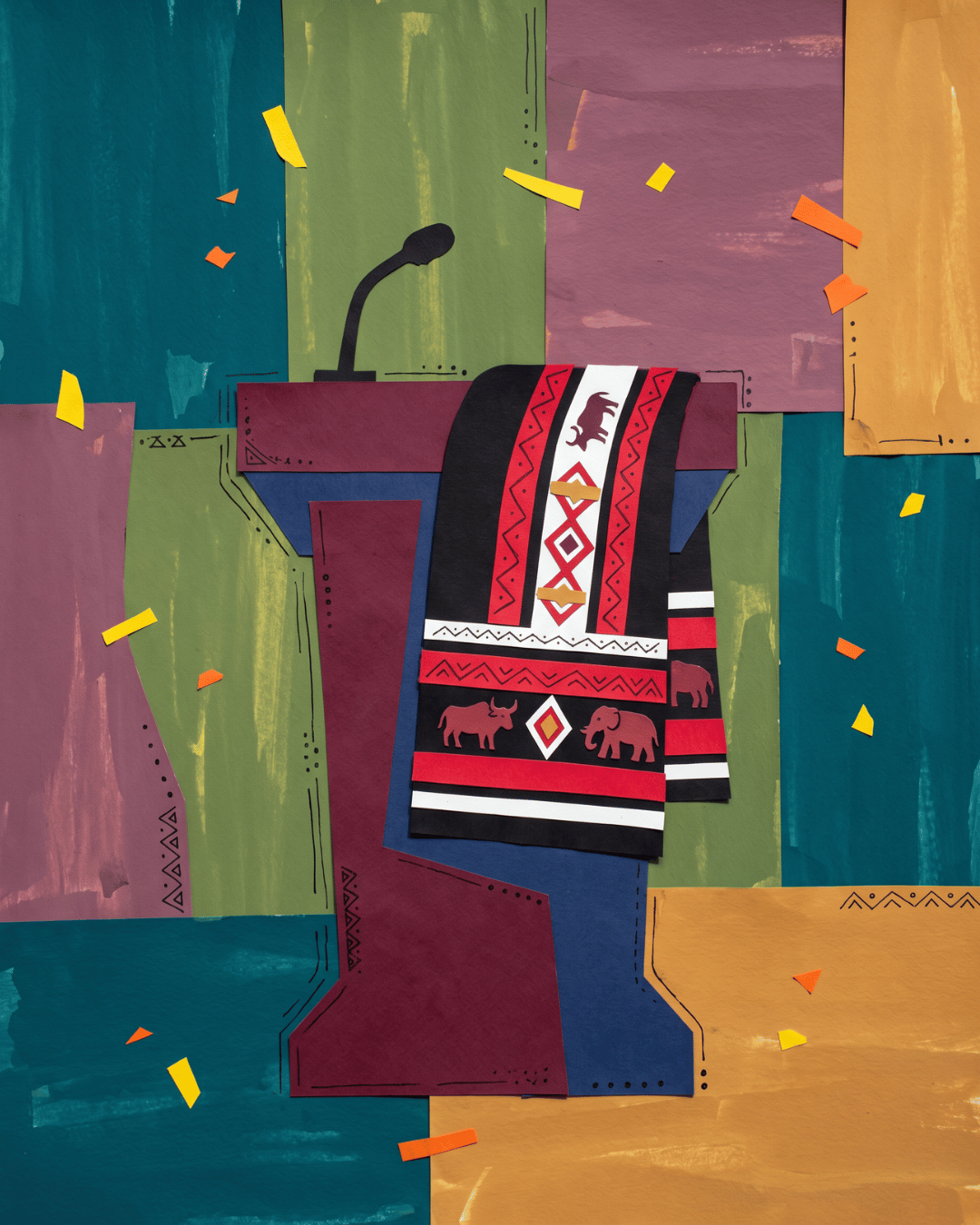

Diplomacy is frequently perceived as a process conducted behind closed doors, involving ambassadors at conference tables, governments issuing formal statements, and delegations negotiating on behalf of their populations. For Indigenous peoples such as the Khmer-Krom, however, diplomacy assumes a markedly different form. We are often excluded from these decision-making spaces. Although our land, culture, religious freedom, livelihoods, and future are frequently the subjects of discussion, we seldom possess an equal voice in shaping these outcomes. For us, diplomacy begins not with negotiation, but with the fundamental struggle for representation, participation, and the opportunity to be heard.
The Khmer-Krom are the Indigenous Khmer people of the Mekong Delta, a region we refer to as Kampuchea-Krom. Our communities have preserved the Khmer language, Theravada Buddhist traditions, temples, customs, and a deep connection to our ancestral homeland across generations. However, the Vietnamese government does not recognize the Khmer-Krom as Indigenous Peoples, instead categorizing us within the country's officially recognized ethnic minority system. This distinction extends beyond terminology. Recognition determines whether a people can articulate their relationship to ancestral lands, collective identity, culture, and development within the framework of Indigenous rights. It also influences who is authorized to represent us.
In conventional diplomacy, governments are assumed to represent all individuals within their borders. However, challenges arise when an Indigenous community asserts that the government's portrayal of its circumstances does not align with its lived reality.
This is a central issue confronting the Khmer-Krom. Vietnam actively participates in international institutions, even as a current member of the Human Rights Council, and its representatives address governments and United Nations bodies with the authority of a recognized state. In contrast, an ordinary Khmer-Krom farmer, Buddhist monk, woman, student, or human rights defender in the Mekong Delta lacks comparable access. When matters concerning Indigenous identity, religious freedom, land, language, or expression are discussed, Vietnam can present its policies on the international stage, while the communities most affected by these policies have significantly fewer opportunities to share their perspectives. This imbalance underscores the importance of independent representation.
The KKF has dedicated decades to establishing peaceful avenues for Khmer-Krom voices to reach international institutions. Our strategy is grounded in nonviolence and adherence to international human rights standards; rather than responding to repression with confrontation, we have prioritized documentation, dialogue, and recourse to international law. In 2001, the Khmer-Krom, through the KKF, became members of the Unrepresented Nations and Peoples Organization (UNPO). This membership provided something of exceptional significance to a people lacking diplomatic representation: a platform. Without an embassy, we could still cultivate relationships. Without ambassadors, we could engage with policymakers. Even without a formal seat among states, we could participate in international discussions about our future.
Over time, these efforts have evolved into a form of people's diplomacy. Our representatives travel to Geneva, New York, Washington, London, Ontario, Canberra, various European capitals, and other international forums, where they meet with diplomats, parliamentarians, human rights organizations, Indigenous representatives, and civil society leaders. At the United Nations, Khmer-Krom advocates participate in mechanisms such as the Permanent Forum on Indigenous Issues and the Expert Mechanism on the Rights of Indigenous Peoples. The KKF and its partners have also submitted information to treaty bodies reviewing Vietnam's human rights obligations. These forums matter because they let information from our voiceless communities transcend national boundaries. A Khmer-Krom farmer in the Mekong Delta may never enter a United Nations building. A Buddhist monk facing restrictions on religious activity may never meet a foreign diplomat. A mother whose son or daughter has been imprisoned may never testify before an international institution. Representation bridges these individuals and international institutions. The advocate's responsibility is not merely to speak, but to convey these voices faithfully into spaces they cannot safely access themselves. This is the essence of Indigenous diplomacy: diplomacy not for prestige, but for meaningful participation.
For Khmer-Krom communities, international participation often entails significant risks.
Activists have faced arrest and prosecution for peacefully promoting human rights, disseminating information about the UN Declaration on the Rights of Indigenous Peoples, participating in religious activities, or expressing views online. This situation has attracted the attention of United Nations human rights experts: in July 2025, UN Special Procedures transmitted a communication to Vietnam regarding 17 Khmer-Krom individuals, including human rights defenders, activists, and Theravada Buddhist monks and followers, who had allegedly been arbitrarily arrested or deprived of liberty for exercising freedoms such as religion, expression, association, assembly, and linguistic and cultural rights. This situation exposes a troubling contradiction: while international institutions encourage civil society and Indigenous Peoples to participate, those who attempt to exercise these rights domestically may face repercussions. Participation cannot be meaningful if individuals fear the consequences of their involvement. No one should be forced to choose between engaging with the international community and remaining safe in their homeland. Therefore, diplomats and institutions must look beyond the mere existence of consultation and instead assess whether individuals can participate freely, independently, and without fear of reprisal.
Governments increasingly advocate for inclusive diplomacy. For Indigenous Peoples, inclusion must have tangible implications: discussions about us should not occur without providing meaningful opportunities for our voices to be heard. When governments engage Vietnam on issues such as human rights, sustainable development, climate adaptation, religious freedom, trade, or the Mekong Delta, Khmer-Krom perspectives should be integral, not supplementary. The Delta faces significant environmental challenges, and for communities whose culture and livelihoods are intrinsically linked to the land and waterways, climate policy is inherently an Indigenous rights issue. International partners may fund development or environmental programs intended to benefit the region, but such efforts cannot be genuinely inclusive if they regard Indigenous communities solely as beneficiaries rather than active participants. Khmer-Krom farmers possess generations of knowledge about their land. Buddhist monks understand the cultural significance of the Buddhist pagoda. Women comprehend how economic changes affect families and the transmission of culture. Young people are acutely aware of the pressures drawing them away from ancestral communities. Diplomacy should incorporate this knowledge, and consultation should occur during the formulation of priorities, not merely after policies have been established.
This principle extends further. When foreign governments conduct human rights dialogues with Vietnam, they should consult independent Khmer-Krom representatives in advance. When delegations visit the Mekong Delta, they should actively seek opportunities to meet with Khmer-Krom community members without government oversight. When assessing religious freedom, governments should engage with independent Khmer-Krom Buddhist monks. When international institutions address the situation of Indigenous Peoples in Vietnam, Khmer-Krom individuals should be afforded the opportunity to self-identify and express their perspectives directly. This is not a request for diplomacy to adopt a particular stance; it is a call for diplomacy to listen.
It is also essential to distinguish between presence and representation. A government may cite the inclusion of individuals from minority communities in official institutions as evidence of political participation, but authentic representation requires more than mere presence. Can these individuals speak independently? Can the community select its own representatives? Are these representatives able to address issues such as Indigenous identity, land rights, religious freedom, or self-determination, and express disagreement with government policy without fear of reprisal? If these conditions are not met, representation is superficial rather than substantive. For Indigenous Peoples, the right to participate must encompass the ability to choose those who speak on their behalf.

The international system was primarily constructed around states, yet many of today's most pressing challenges, including climate change, displacement, cultural survival, resource extraction, and human rights, cannot be addressed solely through intergovernmental dialogue. Indigenous Peoples contribute knowledge, history, and perspectives that governments alone cannot offer. Organizations such as UNPO illustrate the importance of alternative diplomatic spaces: they enable peoples without conventional representation to understand international institutions, build alliances, document their experiences, and present their concerns to policymakers. Since joining UNPO over two decades ago, the KKF has continued to advocate through peaceful international engagement, demonstrating that diplomacy is not the exclusive domain of governments. A Buddhist monk explaining restrictions on religious freedom, a young Khmer-Krom woman speaking at the United Nations, a farmer describing changes to ancestral land, or an activist documenting an arrest for human rights mechanisms- all are engaging in diplomacy. Although these actions may not be featured in photographs of presidential summits, they play a vital role in connecting communities to the international system.
As Indigenous communities merely seeking justice, we urge diplomats to engage directly with our communities. We call upon international institutions to protect those who participate in their mechanisms. We ask development partners to consult Indigenous communities prior to making decisions that affect ancestral lands. Furthermore, we encourage Vietnam to recognize that peaceful dialogue with independent Khmer-Krom representatives is not a threat, but an opportunity: meaningful participation can foster trust, dialogue can prevent conflict, recognition can safeguard cultural diversity, and enabling peaceful expression of grievances strengthens societies.
For generations, decisions impacting the Khmer-Krom have frequently been made without our involvement. The future must be different. Diplomacy in the twenty-first century should be evaluated not solely by the number of governments at the table, but by the extent to which those most affected can participate meaningfully. For Indigenous Peoples, representation is not symbolic; it is the capacity to defend our identity, safeguard our communities, and engage in decisions concerning our ancestral homeland. At times, representation is simply the right to enter the room and assert: we are present, we have our own voice, and we ask to be engaged with directly, not merely discussed.