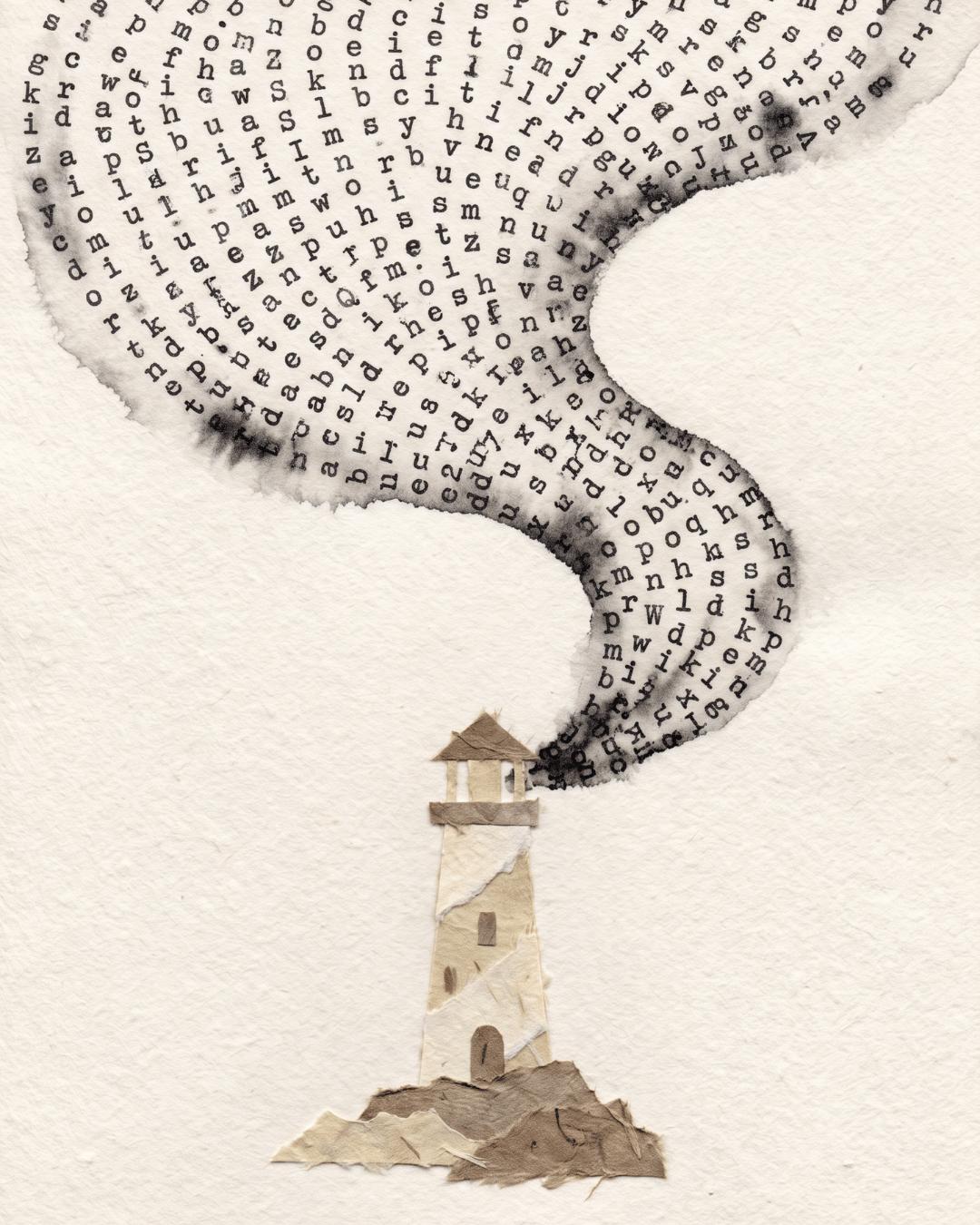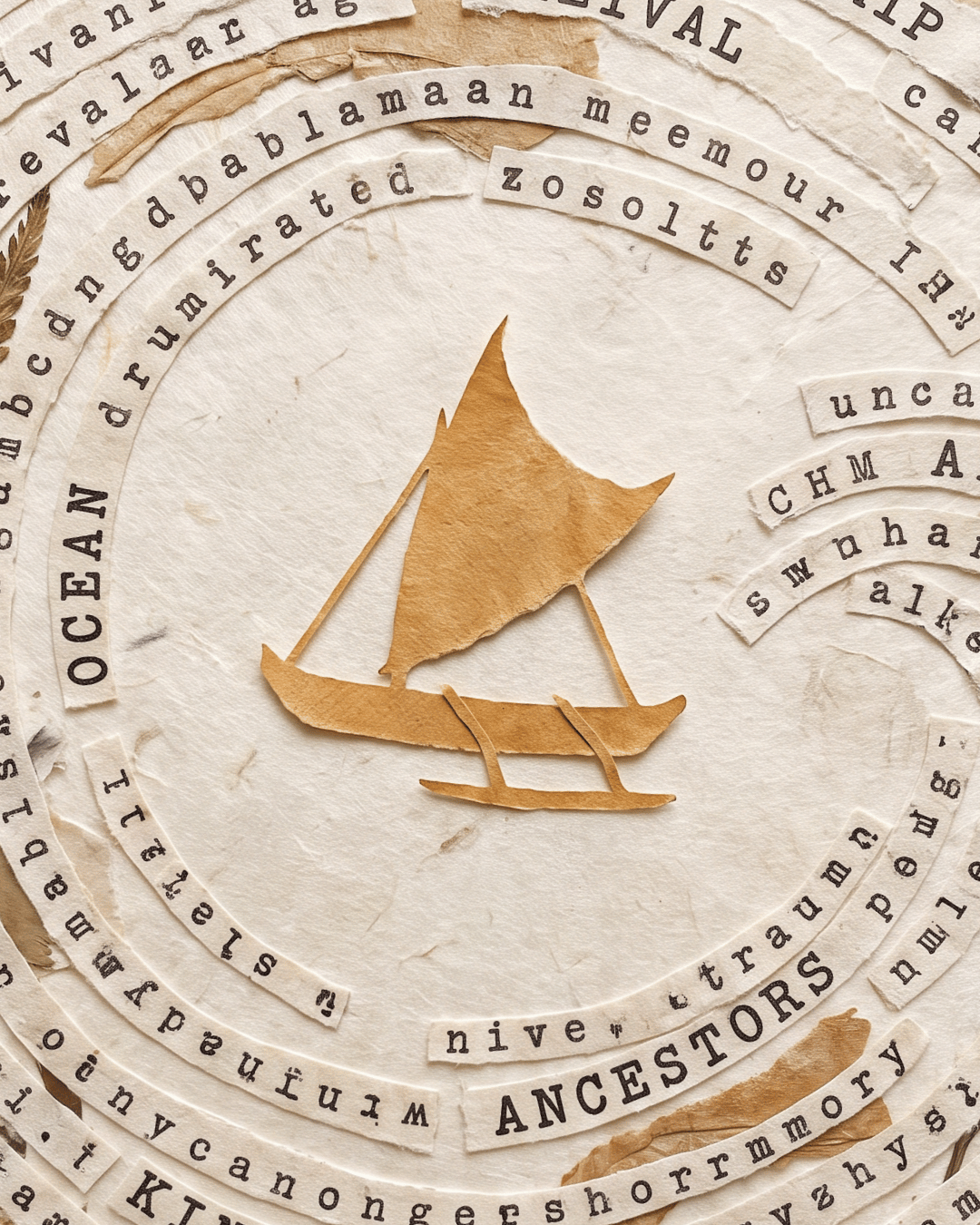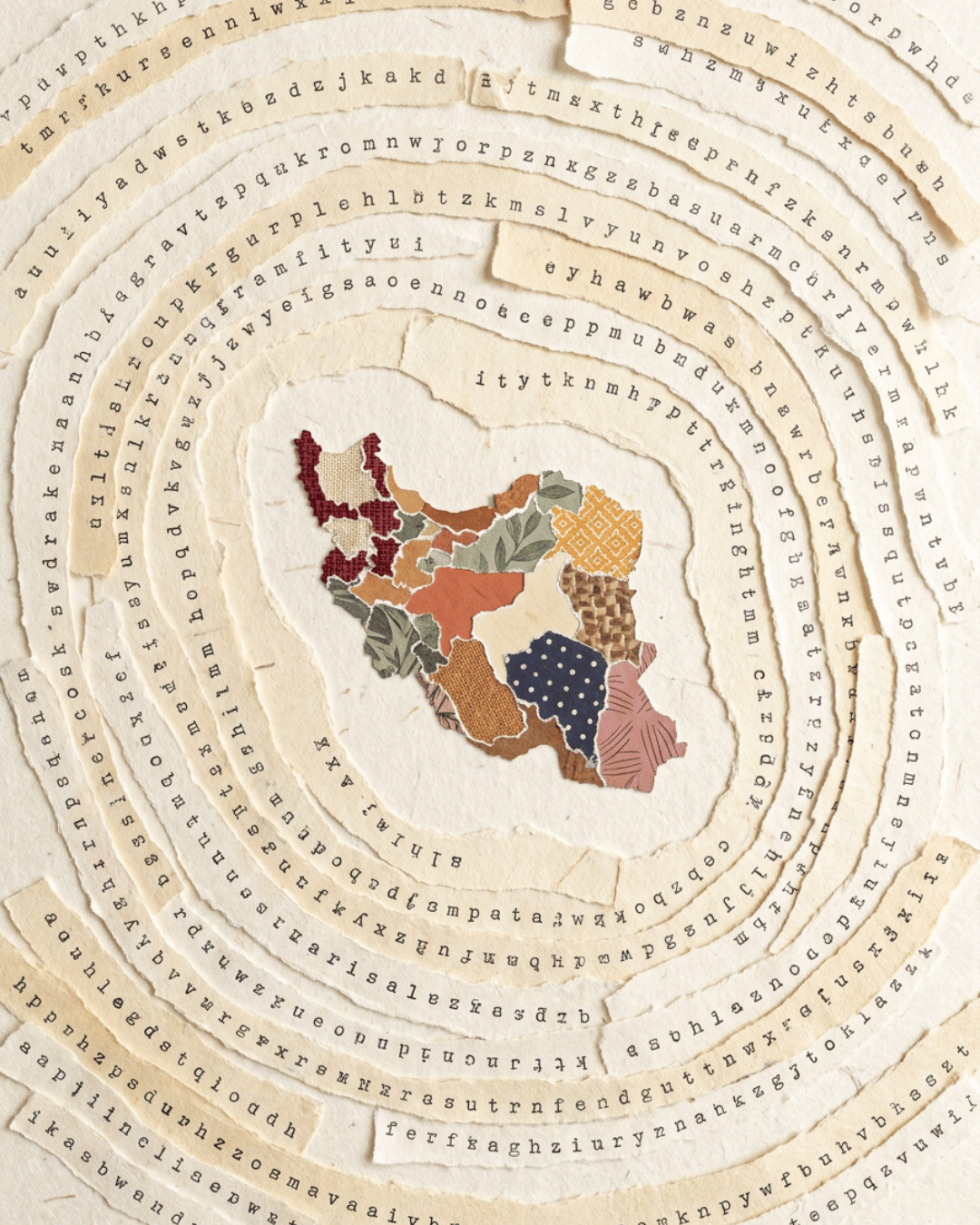

Most people never have to think about the language they speak.
It is simply there. It is the language they grow up with, learn in school, speak with family, and carry with them throughout their lives. Few ever stop to think about it.
For many people in Iran, however, language is something they are forced to think about every day.
Outside the country, most people assume they know which language is spoken there: Persian.
That is true - but only partly.
Iran has never spoken with one voice.
Persian is the country's official language, but it is only one major piece of a much larger linguistic mosaic.
Kurdish. Balochi. Gilaki. Mazandarani. Talyshi. Azeri. Arabic. And many more.
These languages have shaped Iran's history for centuries and continue to be spoken by millions. Yet they are often missing from the way the country is understood - both abroad and, many argue, within Iran's own education system.
But what happens when the language you grow up with is not the language you're expected to learn in?
When Nasser Abiat, 46, started school, he couldn't understand a single word his teacher was saying.
At home, his family spoke Arabic. In the classroom, every lesson was in Persian.
"I didn't understand anything," he recalls. "Not a single word."
When he answered his teacher in Arabic, he says he was beaten.
"I went home crying. I didn't want to go back to school."
More than three decades later, he still remembers that feeling.
Abiat grew up in Ahvaz, in Iran's southwestern Khuzestan province, where Arabic is widely spoken by the region's Ahwazi Arab community. Now living in Umeå, Sweden, he says his experience reflects a broader reality shared by millions of Iranians who grow up speaking a language other than Persian at home.
At home, Arabic was never simply a way of communicating. It was the language of family, everyday life, and belonging. Speaking it was as natural as breathing.
School was the first place where he learned that the language he had grown up with was treated differently.
Years later, Abiat came to understand that language is about more than words. It creates a sense of belonging.
"When I speak Arabic with other Arabs, they immediately say, 'You are one of us," he says. "Language creates belonging." It is a feeling he still remembers losing on his first day of school.
Although Article 15 of Iran's Constitution states that regional and ethnic languages may be used in the media and taught alongside Persian in schools, the reality has often looked very different.
While Persian remains the sole language of instruction throughout primary and secondary education, generations of children from Kurdish, Baloch, Ahwazi Arab, Azerbaijani, and other linguistic communities have entered classrooms speaking a different first language.
Abiat points to another contradiction. Arabic is taught in Iranian schools, but Abiat says the lessons are not designed to help children communicate in the language or develop a broader understanding of its grammar.
Instead, the focus is largely on enabling students to read the Arabic text of the Qur'an. For Arabic-speaking children like him, this meant that even when their mother tongue appeared in the curriculum, it was not taught as a living language.
"How can a child learn to read in a language they don't even understand?" asks Professor Carina Jahani, a Swedish linguist and Iranologist at Uppsala University who has spent nearly four decades researching Iran’s minority languages.
Abiat's story is far from unique.
Jahani has spent decades researching Iran's minority languages. She says children who begin school in a language they do not understand face an unnecessary disadvantage from the very beginning.
"How can a child learn to read in a language they don't even understand?" she asks.
"You have to learn a new language while learning to read and write. It's an absurd situation."
“Children who start school in a language they already speak”, she explains, “have a clear educational advantage”. Those who speak another language at home must first overcome a language barrier before they can fully participate in the classroom.
Abiat has seen the consequences firsthand. He says many children struggle to keep up academically, and some eventually leave school altogether. He compares the experience to asking a child to move abroad overnight.
"Imagine moving to another country tomorrow," he says. "You have to study in a language you've never spoken before, while competing with children who have spoken it their entire lives."
For many children, he says, the challenge was not simply learning a new language. It was trying to keep up in every subject while learning that language at the same time.
For Abiat, those consequences did not disappear after childhood. They followed many people into adulthood.
He remembers how older relatives who never became fully comfortable in Persian often depended on younger family members to navigate everyday life.
He remembers accompanying family members to banks, hospitals, and government offices to translate. His mother, he says, could travel to Iraq without needing an interpreter, yet in Ahvaz - the city where she had lived for years - she often depended on her children to help her communicate with officials.
However, learning Persian did not necessarily mean feeling accepted. Abiat says many children were mocked for speaking it with an Arabic accent, leaving some reluctant to speak at all.
Jahani says that for many years, speaking Persian fluently - and without an accent - was often associated with education and social status, while minority language speakers were frequently stereotyped as less educated or less sophisticated.
For many families, those experiences shaped difficult decisions at home. Parents who had experienced discrimination themselves often came to believe that raising their children primarily in Persian would spare them from facing the same barriers.
Yet attempts to address that educational gap outside the state school system have also carried serious risks.
Kurdish language teacher Zara Mohammadi was arrested in 2019 after security forces raided the homes of members of the Nojin Cultural Association in Sanandaj. The officially registered organization offered Kurdish language and literature classes to children and adults.
Mohammadi was initially sentenced to ten years in prison for “forming a group against national security.” Her sentence was later reduced to five years, which she began serving in 2022. She was released the following year.
Azerbaijani Turkish language and cultural activists have faced similar treatment. Around 120 people were arrested in connection with peaceful Azerbaijani cultural gatherings in 2018, while activists marking International Mother Language Day have also been detained and, according to Amnesty International, subjected to torture or other ill-treatment.
More recently, Iranian courts imposed heavy prison terms on at least two dozen Azerbaijani minority activists. Human Rights Watch reported in 2025 that the authorities relied on broad accusations including propaganda, collusion against national security, and espionage, without presenting credible evidence for many of the convictions.
In Iran, then, the contradiction is stark: minority languages may be recognized on paper, yet those who try to teach, organize around, or publicly defend them can find their cultural work recast as a threat to national security.
The consequences of such repression are not limited to those who are arrested.
When schools exclude minority languages and independent teachers risk punishment, the responsibility for keeping a language alive is pushed almost entirely onto families.
But families, Jahani warns, are also shaped by the pressures around them. Many parents choose to speak Persian at home because they believe it will give them a better start in school.
For many parents, the decision is not about abandoning their mother tongue. It is about trying to give their children opportunities they themselves never had.
Jahani says many parents genuinely believe that speaking Persian will give the children a better start in school. Yet when the minority language is no longer spoken in everyday family life, it becomes much harder to pass on to the next generation. Over time, fewer children grow up speaking the language of their parents and grandparents.
She points to languages such as Mazandarani and Gilaki, where this shift has already become evident in many communities. While both languages are still spoken today, she says younger generations are increasingly growing up with Persian as their dominant language.
She fears Balochi could face a similar future. If more parents raise their children primarily in Persian, she says, future generations may no longer grow up speaking Balochi as their mother tongue.
Outside the home, children already spend most of their day surrounded by Persian - at school, with friends, through television, and online. If families also stop using their mother tongue, Jahani says, children may never become fully fluent in it.
"A language only survives if people continue to speak it," Jahani says.
If schools cannot guarantee the future of a language, that responsibility often shifts to families. Around kitchen tables, during bedtime stories, and in everyday conversations, parents decide - sometimes consciously, sometimes not - which language will be passed on to the next generation.
Jahani says another reason many of Iran's minority languages have endured is that they are not confined to Iran. Azeri is spoken across Azerbaijan, Kurdish across Iraq, Türkiye and Syria, Balochi across Pakistan and Afghanistan, and Arabic in neighboring Iraq and across the wider Arab world.
These cross-border communities help sustain the languages across generations, even when opportunities to learn or use them are limited inside Iran.
For Kurdish-Norwegian poet, author, and activist Avin Rostami, allowing Kurdish to disappear was never an option. Language was never just about communication. It was something inherited, protected, and passed from one generation to the next.
Growing up in a Kurdish family, speaking Kurdish was never treated as optional. It was simply part of who they were.
In the years following Iran's 1979 Revolution, Rostami's father secretly taught Kurdish after it disappeared from schools. She says preserving the language became an act of resistance as much as an act of love. Today, that responsibility has become her own.
Today, Rostami finds herself making many of the same choices her parents once made. Kurdish is the language she instinctively turns to when comforting her children.
Hearing her children speak Kurdish fills her with pride. It reminds her that the sacrifices made by earlier generations did not end with them. What her father once risked so much to preserve is now being carried forward once again.
"It has become a valuable inheritance," she says.
Asked to describe Balochi in a single word, Sedra Sheikhzadeh hesitates.
She can't.
Instead, she describes it as "a warm, homey feeling."
Growing up in Norway in a Baloch family, she says her parents also insisted on speaking their mother tongue at home. Persian, Norwegian, and English - those could all be learned elsewhere. Balochi, she says, could not.
Sheikhzadeh says she feels a particular sense of joy whenever she hears the younger generation speaking their mother tongue, whether it is Balochi, Kurdish, Arabic, Turkish - or another language.
Today, the language remains part of her everyday life. She listens to Balochi music, speaks it with family and friends, and laughs when describing one unexpected benefit. "Sometimes it's nice to have a language that not everyone around you understands."
That inheritance also lives in the words themselves.
Some expressions, Rostami says, lose something essential in translation because they carry generations of affection, history, and family memories.
There are countless ways to express love in Kurdish, she says, that simply do not exist in Norwegian. Gyanakam— "my soul." Dli daye — "mom's heart." Hamo kasm — "my entire lineage." "It is in Kurdish that I express love and care most naturally."
In her poem I Think I Love You in Kurdish, she writes:
"I can't promise to love you in any other way than Kurdish."
“I Think I Love You in Kurdish
That is why the world grows deeper and wider—
not because loving in Norwegian
is somehow smaller or narrower,
but because the words in Kurdish
carry so much more.
Within the language lies an endless landscape
for expressing love.
You say I can be intense at times,
but if you had heard my poems in Kurdish,
the word intense
would take on an entirely different meaning.
In Kurdish, it belongs to everyday speech
to love those you love without limits,
to sacrifice yourself—yes, your very life—
without hesitation.
I can say I love you in Kurdish
a hundred different ways.
And when I look at you,
sometimes I can barely help but whisper:
hanasakam—
my breath.
Then I understand
why you think
I am intense.
But love is the heart of life
where my roots come from.
We do not exist as solitary trees
planted in an empty universe.
We are a forest—
different in shape and form,
yet grown together in belonging.
When I see my children
after a long day's work,
I can embrace them
and say:
hamo kasm,
hamo gyanm—
my whole family,
my entire existence.
And this profound love
is the glue that holds life together.
Intense, unconditional,
and boundlessly beautiful.
So perhaps, in time,
we will come to understand
that we love just as deeply,
only differently—
in different languages.
And perhaps
you will learn
what it is like
to be loved a little more intensely.
Because I cannot promise
to love you
in any way
other than in Kurdish.
It lives within the language,
woven into my very bones.
After all, my name is Avin—
which is also
another word for love.»
Some words can be translated. Others carry meanings that, for Rostami, no translation can fully preserve.
Those stories reflect something far greater than language policy or education for Jahani.
Asked what a mother tongue means to her, linguist Carina Jahani answers first in Balochi.
"Shomay peti mirās ent," she says.
She then translates it herself: "It is the inheritance you have received from your forefathers."
For Abiat, that inheritance is one he is determined to protect. He has chosen to raise his children in their mother tongue rather than Persian, a decision he says was shaped by the experiences he still carries from his own childhood.
Sheikhzadeh understands why some families feel that way, but draws a distinction between the language itself and the policies that have shaped their experiences. "It's not the language's fault," she says. "Knowing more languages is only a plus."
For some, a mother tongue is an inheritance. For others, it is simply, as Sheikhzadeh describes it, "a warm, homey feeling." Whatever words people choose, they all point to something larger than language itself.
Whether spoken in the classrooms of Ahvaz, the mountains of Kurdistan, the villages of Sistan and Balochistan, or the forests of Mazandaran and Gilan, Iran's minority languages tell stories that cannot be translated by vocabulary alone. They are carried from one generation to the next - or, sometimes, they are not.
Perhaps that is why preserving a language is never only about words.
It is about preserving memories, relationships, and ways of expressing love that exist nowhere else.
And it is about making sure that one day, another child will inherit a language they never have to think about losing.
About the Author
Nina Yaminah Daneshvar is a journalist and multimedia storyteller whose work explores identity, belonging, and underrepresented communities through feature writing and multimedia journalism. Born and raised in Norway, with roots in Sistan & Balochistan in Iran, she recently completed a BA (Hons) in Journalism at the University of Westminster and will begin an MSc in Politics and International Relations at SOAS University of London in 2026.