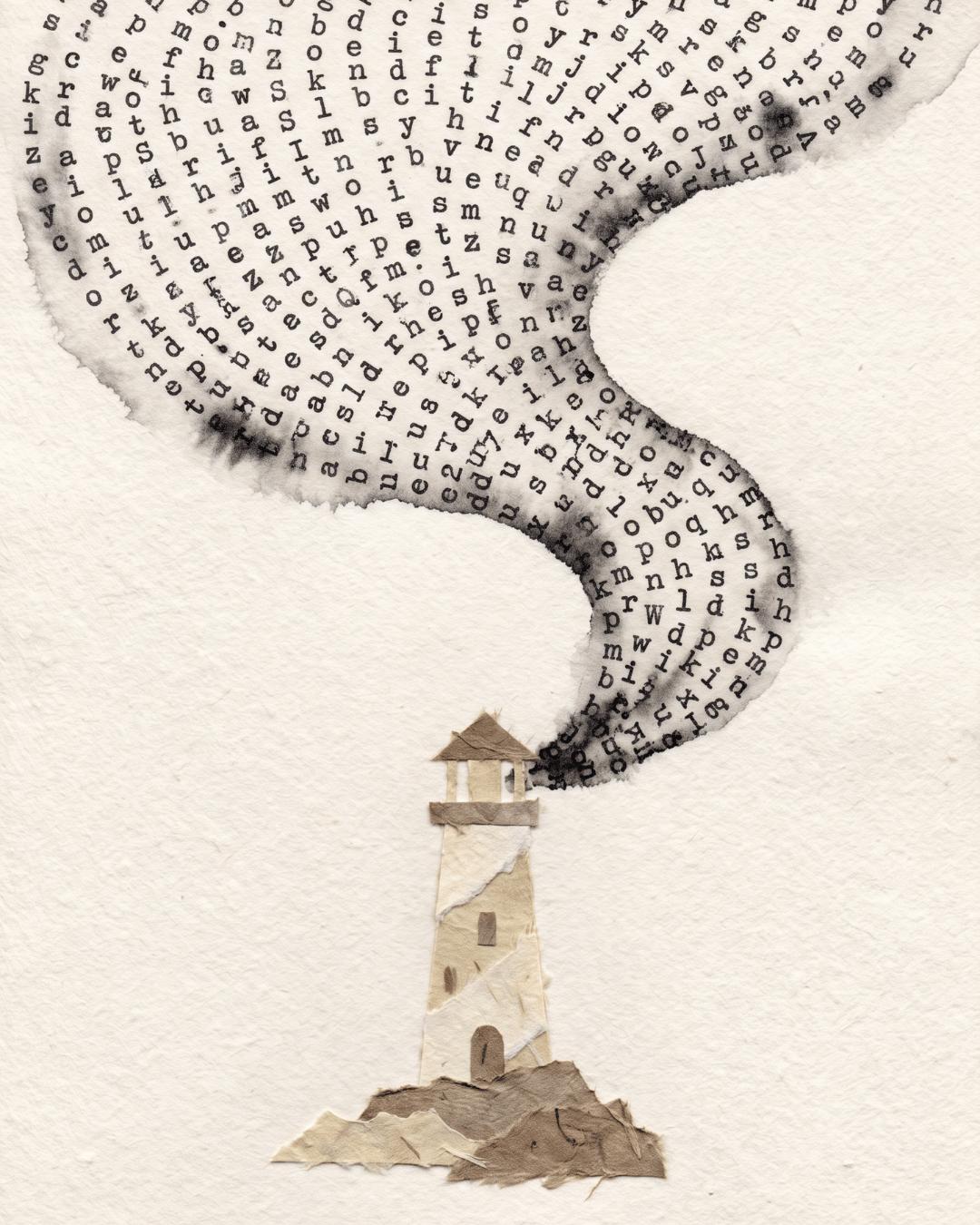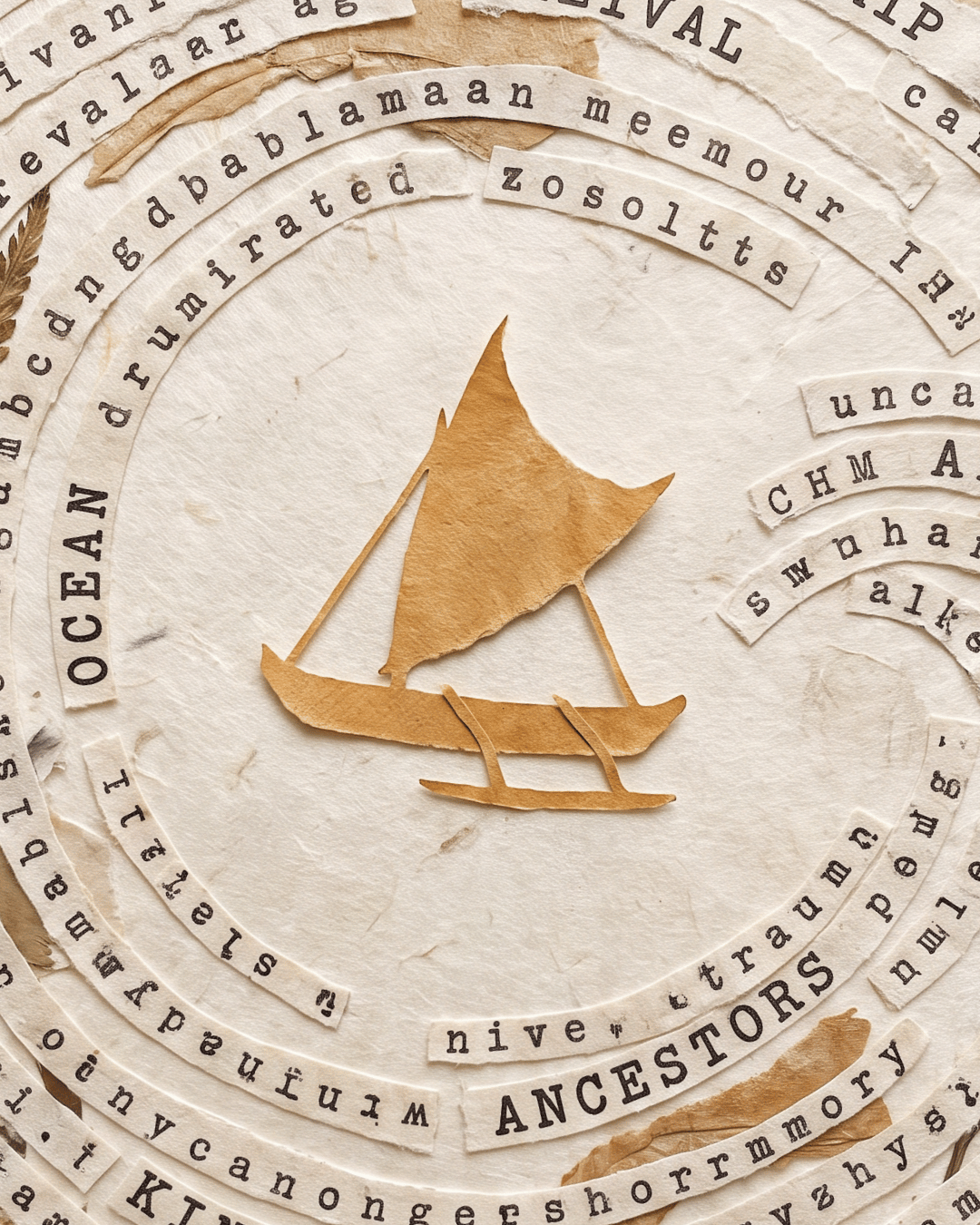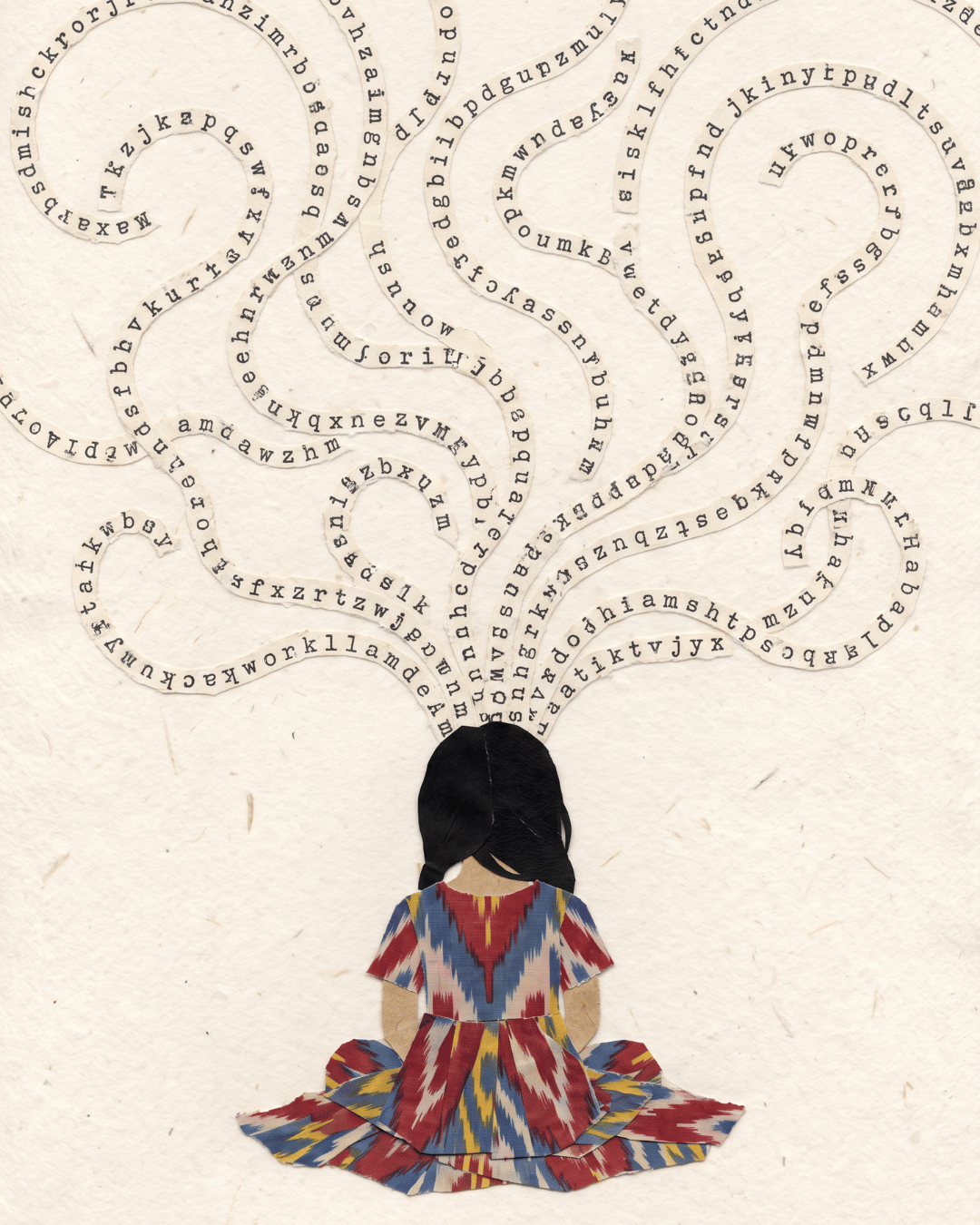

There are days when I forget which language I am thinking in.
A sentence begins in German, turns into Uyghur, borrows a word from Turkish, and ends somewhere in English. Russian appears like an old neighbour at the door. French stands there too, polite but demanding. Swiss German walks in without knocking.
People call this being multilingual.
Some days, it feels more like being no-lingual.
Not because the languages are missing. They are all there. They live in different corners of the mind. They know when to appear. They know which room they belong to. But between them, there is sometimes a pause. A small silence before the right word finds its way home.
Languages change more than our sentences. They change the way we stand inside them.
In one language, I become more precise. In another, softer. One language makes humour arrive faster; another makes respect sound almost ceremonial. Some languages make you practical. Some make you poetic. Some carry childhood so strongly that even ordinary words feel dressed for memory.
And then there is Uyghur.
Uyghur does not make me perform another version of myself.
It brings me back.
I first lived in Ürümchi, where Uyghur was around me, but so was Chinese. Later came Tashkent, where Uzbek and Russian moved through the streets and markets. Then Switzerland, where I had to learn standard German first, then Swiss German, and later English and French for studying, working, explaining, surviving.
Each place gave me a language.
But home kept one.
At home, my parents never announced a language policy. They did not need one. Uyghur was already sitting at the table. It was in the way my mother called from another room. In the sound of food being placed down. In small arguments, in jokes, in elders speaking slowly, in stories told again even when everyone already knew the ending.
Outside, the street signs changed. The school language changed. The country changed.
Inside, Uyghur remained.
My parents are multilingual too. They move between languages with the ease of people who have not only learned history from books, but lived through it. Still, they always returned to one sentence: language is identity.
As a child, I heard it so often that it almost became background noise. I understood the words, but not the weight. To me, speaking Uyghur at home felt ordinary.
That was the gift.
Some things protect us before we know we need protection.
I understand now that multilingualism was never the threat. The threat was always erasure. The loss of the one language that cannot be replaced, the one that cannot simply be swapped for something more convenient.
What my parents gave me, without making it dramatic, was a home where Uyghur was simply the language of home. Not a lesson. Not a political statement. Just the normal, everyday sound of our family being ourselves.
That normalcy, which I never thought twice about as a child, is now something many Uyghur families inside East Turkestan cannot give their children freely. The ordinary sound of a mother speaking to her child in her own language has become, in our homeland, something that has to survive pressure, fear, and policy.
Language is not only a tool for communication. It is the root of everything that grows from people.
Through language, epochs develop. Literature, poetry, songs. Art and politics. A specific humour that only works in one tongue. A proverb that carries generations of wisdom in a few words. The way people learn to name grief, love, dignity, or the colour of a winter morning.
When you lose a language, you do not only lose words.
You lose the world those words were holding.
Uyghur is a Turkic language with deep roots in Central Asia. It belongs to the Karluk, or Southeastern, branch of the Turkic language family, close to Uzbek. But saying only that feels too small. It is like pointing at an ancient tree and naming only the bark.
The Turkic language family is vast. Some sources count twenty-three written modern Turkic languages, stretching across deserts, mountains, borders, alphabets and centuries. Uyghur stands among them with an old dignity.
When I hear some Turkic languages, I often feel as if I am standing before a great tree with many branches. Some grow close enough to touch. Others reach far in another direction. Each has its own leaves, its own shape, its own shadow. But somewhere below the earth, the roots still know each other.
I do not understand everything. Each language has its own body, its own pride. But there is a closeness. A familiar sound. A door half-open. Uzbek often reaches me almost before I realise I am understanding it. Turkish arrives first in fragments, then in whole meanings. Kazakh and Kyrgyz sound further away, but not foreign in the way other languages can feel foreign.
This is not only grammar.
It is memory travelling through sound.
Uyghur is also one of the old literary languages of Central Asia. It is rich, layered, and deeply expressive. A language of poetry, prayer, satire, longing and thought. It has held within it centuries of beauty that most of the world has simply never been given the chance to encounter.
It belongs to the wider Chagatai Turkic world of Central Asia, the world of Alisher Navai, where language was not only used to speak, but to build civilisation.
A language can do that.
It can build a room where a person recognises itself. It can carry humour that dies in translation. It can make a grandmother’s sentence feel like a whole archive. It can turn a song into a map. It can make a child understand where they come from before they understand borders.
When people ask me if there is one Uyghur word that means something special to me, I never know what to answer.
It is not one word.
It is a feeling.
The feeling of entering a room and not needing to explain yourself. The feeling of hearing your mother tongue after a day spent in another language. The feeling of being tired in German, polite in French, practical in English, joyful in Turkish, but somehow fully yourself in Uyghur.
Language is not only how we speak.
It is how we return.
When you lose a language, you do not only lose words. You lose the world those words were holding.
In Switzerland, something often happens when people hear me speak Uyghur. They stop, listen for a moment, and ask: what language is that?
It is a question I have answered hundreds of times.Usually there is curiosity. Sometimes surprise. Sometimes a kind of wonder, because the sound does not fit any map they have been given. For them, Uyghur arrives as something new. For me, it is older than the countries that have tried to rename us.
I feel two things when I answer.
First, a small tiredness. The tiredness of explaining, again, that we exist. And then, underneath that, something harder to name, the weight of knowing what it costs, right now, for a language this old and this alive to still need introduction.
What people do not usually know is that they are hearing the living continuation of something ancient. A language from the heart of the Silk Road. A language spoken by more than a dozen million people, mostly in East Turkestan. A language that carried scholars, poets, merchants, law, prayer, jokes, lullabies, and ordinary life across centuries.
It should not be a discovery.
The older Uyghur script tells part of this story. Its letters once moved across Central Asia with people who traded, taught, governed, believed, argued, wrote and remembered. Later, the Uyghur alphabet became the basis for the Mongolian writing system. A script born from our world travelled into another empire and shaped the way power wrote itself down.
The world rarely remembers this.
It should.
Because what is happening to Uyghur today is not the fading of a small language at the edge of history. It is the targeting of a language that has survived empires, migrations and borders drawn by other people’s hands.
And now, it is being taken from the places where it should live most naturally.
Not in one dramatic moment. Not only through one law. But through the slow machinery of assimilation: classrooms, libraries, signs, maps, screens, names.
For decades, Chinese authorities have pushed Uyghur out of public life. First, a language is called less useful. Then less modern. Then less necessary. Then it becomes decoration.
In East Turkestan, the Uyghur homeland, Uyghur has been steadily removed from education. In 2002, Xinjiang University, once a bilingual institution, moved away from offering courses in Uyghur. In 2004, school consolidation policies pushed minority schools further towards Chinese-language instruction. What was called bilingual education became something else: Mandarin at the centre, Uyghur at the edge.
Even the streets began to speak differently.
There were signs where Chinese characters stood large and clear, while Uyghur letters appeared small above them, like an afterthought. Some Uyghurs jokingly called those tiny letters “eyebrows.” It is a sharp joke, but also a sad one. A language that once named the world around you becomes a small mark above another language’s face.
In recent years, the pressure has become even harder to disguise. In parts of East Turkestan, Uyghur has been removed from schools. Children who should have learned to read and write in their mother tongue are increasingly educated away from it. UN experts have raised concern that Uyghur children in state boarding schools have little or no access to education in the Uyghur language. A new ethnic minority law passed in China in 2026 now gives Mandarin priority in education and official functions.
It sounds administrative when written that way.
It is not.
It means a child may learn the language of the state before the language of their grandmother. It means a mother tongue becomes something private, then inconvenient, then risky, then absent.
Books have disappeared from libraries and homes. Uyghur websites and digital spaces have been shut down. Songs, words, names and memories have all become things to measure carefully.
And then there are the camps.
The camp system did not appear out of nowhere. It grew out of years of surveillance, “anti-terror” campaigns, and policies that treated Uyghur identity itself as a problem to be corrected. From around 2017, this system expanded into mass detention. At least one million Uyghurs and other Turkic Muslims are widely believed to have been detained in camps and other facilities; several researchers and rights groups have placed the figure between one and three million.
China called these places “vocational training” or “re-education” centres. Survivors have described them differently: places where people were watched, punished, indoctrinated, and pressured to renounce parts of themselves that should never have been on trial.
In such places, language is not treated as innocent.
It becomes evidence of who has not yet been remade.
Later, the pressure moved even deeper into names.
Religious names common among Muslims were restricted. Villages with names carrying Uyghur history, faith or culture were renamed. Words connected to shrines, instruments, memory and place were removed and replaced with words that sounded clean and obedient: unity, harmony, happiness.
But a name is never just a name.
A place name carries the footsteps of those who lived there before. It carries the saints, the musicians, the farmers, the stories, the jokes, the grief, the weddings, the graves.
Change enough names, and a map begins to forget its own people.
Children are always the first to feel these changes.
A child learns identity before they can define it. They learn it in the way adults speak around them. In the names of dishes. In lullabies. In prayers whispered too softly for politics to hear. In the rhythm of being corrected by someone who loves them. In the small embarrassment of mispronouncing something, and the small joy of getting it right.
If those things disappear, something deeper than vocabulary is lost.
A person does not lose its language in one day.
It loses it first in schools.
Then in offices. Then in streets. Then in names.
Then, one day, a child understands everything but answers in another language.
And everyone says it is normal.
Maybe it is normal.
But it is not harmless.
In the diaspora, something urgent is happening too. Uyghur communities from Istanbul to Zurich to Sydney are doing what communities have always done when their culture is under threat. They are holding on, and finding new ways to pass things forward. Parents speak Uyghur at home with a deliberateness that was not always necessary before. Community schools teach children to read and write in a language a state has tried to silence. Poets publish. Musicians record. Young people speak in parliaments, then go home and help younger children learn a dance, a song, a word, a history.
This is not nostalgia. It is continuity.
Still, language loss in the diaspora has its own quiet shape. It does not always arrive through force. Sometimes it arrives through school schedules, work exhaustion, migration, mixed environments, and the simple fact that many Uyghur children grow up without other Uyghur children nearby.
I know this feeling.
For much of my life in Switzerland, Uyghur was not something I could step into outside the home. I did not grow up with a circle of Uyghur friends my age nearby. There was no street, no classroom, no ordinary weekend where Uyghur language simply surrounded me. Like many young Uyghurs in the diaspora, I often met other Uyghurs only a few times a year, sometimes across countries, at commemorations or international gatherings.
This changes the way a language lives.
A language needs more than love. It needs rooms. It needs repetition. It needs children hearing other children use it without thinking. It needs jokes, small fights, secrets, songs, friendships, and the kind of everyday closeness that no textbook can replace.
No one needs to ban a language for it to weaken.
Distance can do it. Silence can do it. Loneliness can do it.
A young Uyghur can love their people deeply and still not have enough places to speak Uyghur freely. A child can know the history of the Uyghur people and still search for the right words when speaking to their grandparents. A family can carry the pain of exile and still struggle to give the next generation the daily world that once carried the language naturally.
I say this without placing blame.
Because love is not the missing part.
Access is. Continuity is. Community is.
Uyghur cannot live only on stages, in speeches, or at commemorations. It has to live where people are most themselves: at the kitchen table, in voice notes, in jokes, in songs, in the small everyday sentences that children hear before they know they are inheriting anything.
For me, Uyghur was never a subject I had to discover later. It was the language waiting at home. It was the one place where the world did not need to translate me.
But I know now that what felt natural to me was protected by choice.
My parents made that choice every day. They could have let the outside language enter the home completely. Many families do, not because they do not care, but because survival is tiring. Migration is tiring. Starting again is tiring.
Yet they kept Uyghur at the centre.
Because of that, I did not inherit only words.
I inherited a way of feeling.
That is what makes the attack on language so dangerous. It is not loud at first. It does not always look like destruction. Sometimes it looks like a new school policy. A new law. A new public slogan. A new idea of what is “modern” and what is “backward.” Sometimes it tells children that their mother tongue is useful only at home, then slowly makes even home feel unsafe.
But language has a stubborn life.
It hides in songs. It returns in dreams. It waits in the mouths of grandparents. It survives in the names we refuse to forget. It crosses borders with people who carry almost nothing else.
And maybe that is why it frightens those who want people to disappear quietly.
Because as long as a language is spoken, a person is not fully silent.
As long as a child can say “I am Uyghur” in Uyghur, something remains unbroken.
I have lived in many languages. I am grateful for them. Each one has opened a door, offered a tool, taught me another way of moving through the world.
But Uyghur is different.
It is not only one of the languages I speak.
It is the one that reminds me where speech begins.
If people are forced far from its land, if its cities are renamed, its history rewritten, its children educated away from their mother tongue, then language becomes more than communication.
It becomes a homeland small enough to carry.
And large enough to keep its people alive.
It should not be rare. It should not be endangered. It should be spoken freely by millions of people on their own land, in their own schools, in their children’s ears at night.
The language is still here.
So are we.
The root holds, even when everything above it is being cut.
About the Author
Rizwana Ilham studied Economics and Languages and has been engaged in human rights advocacy since her teenage years. Since March 2023, she has served as President of the Uyghur Association of Switzerland, where she works to strengthen support for the Uyghur community through public advocacy, demonstrations, institutional dialogue, partnerships with human rights organisations, and participation in panels and public discussions.
In this role, she acts as a bridge between the Uyghur diaspora and Swiss institutions, representing Uyghur interests and raising awareness of the ongoing human rights crisis in East Turkestan. She is also active in international Uyghur youth advocacy and was elected Director of the Youth Committee of the World Uyghur Congress, where she has organised numerous youth events, supported emerging activists, and mentored young Uyghurs in the diaspora.
Further Reading
- Uyghur language, speakers and linguistic background
- Harvard University, Uyghur language overview: https://ealc.fas.harvard.edu/uyghur
- INALCO: https://www.inalco.fr/en/uyghur-lingua-franca-endangered-language
- Encyclopaedia Britannica- Turkic languages: https://www.britannica.com/topic/Turkic-languages
- Encyclopaedia Britannica - Ali-Shir Nava’i: https://www.britannica.com/biography/Ali-Shir-Navai
- Old Uyghur script and its historical influence
- ScriptSource -Old Uyghur script: https://scriptsource.org/scr/Ougr
- Encyclopaedia Britannica: https://www.britannica.com/topic/Mongolian-alphabet
- Indiana University CeLCAR, Uyghur language portal: https://celcar.indiana.edu/materials/language-portal/uyghur.html
- Uyghur language policy and education
- Arienne M. Dwyer- The Xinjiang Conflict: Uyghur Identity, Language Policy, and Political Discourse: https://www.files.ethz.ch/isn/26109/PS015.pdf
- Eric T. Schluessel -“Bilingual” education and discontent in Xinjiang: https://www.tandfonline.com/doi/abs/10.1080/02634930701517482
- PEN America- Decision to ban Uyghur language in Xinjiang schools: https://pen.org/press-release/decision-ban-uyghur-language-xinjiang-schools-attack-minority-groups-linguistic-cultural-rights/
- RFA- China bans Uyghur language in schools in key Xinjiang prefecture: https://www.rfa.org/english/news/uyghur/language-07282017143037.html
- Children, boarding schools and assimilation
- OHCHR: https://www.ohchr.org/en/press-releases/2023/09/china-xinjiangs-forced-separations-and-language-policies-uyghur-children
- Detention camps
- Council on Foreign Relations, China’s repression of Uyghurs in Xinjiang: https://www.cfr.org/backgrounders/china-xinjiang-uyghurs-muslims-repression-genocide-human-rights
- Names, village renaming and cultural erasure
- Human Rights Watch: https://www.hrw.org/news/2017/04/25/china-bans-many-muslim-baby-names-xinjiang
- Human Rights Watch, China: hundreds of Uyghur village names changed: https://www.hrw.org/news/2024/06/18/china-hundreds-uyghur-village-names-change
- Associated Press : https://apnews.com/article/da3152596943e4d5ff9a5b232582782e
- Recent legal developments
- Reuters: https://www.reuters.com/world/china/china-set-pass-new-ethnic-minority-law-prioritise-use-mandarin-language-2026-03-12/