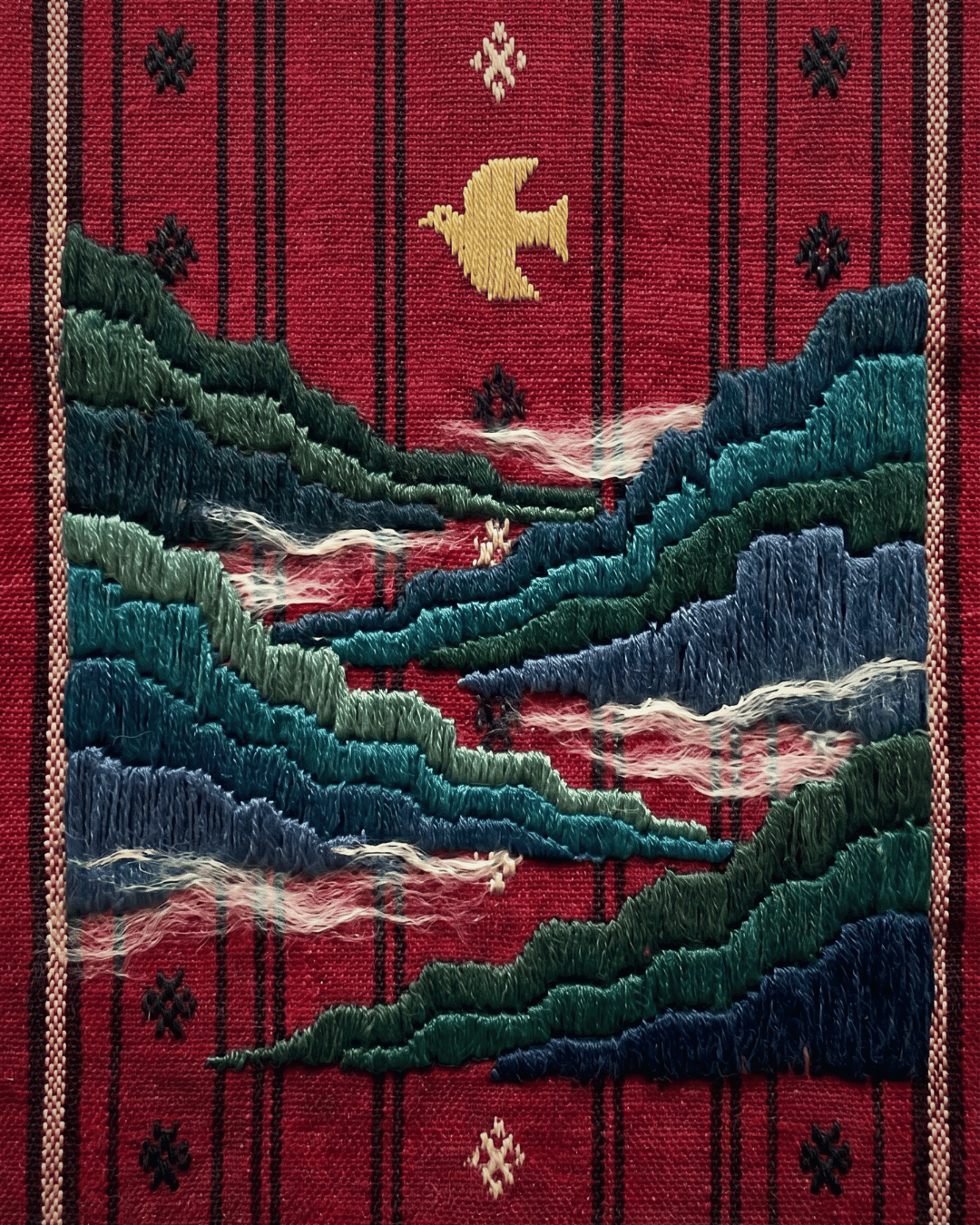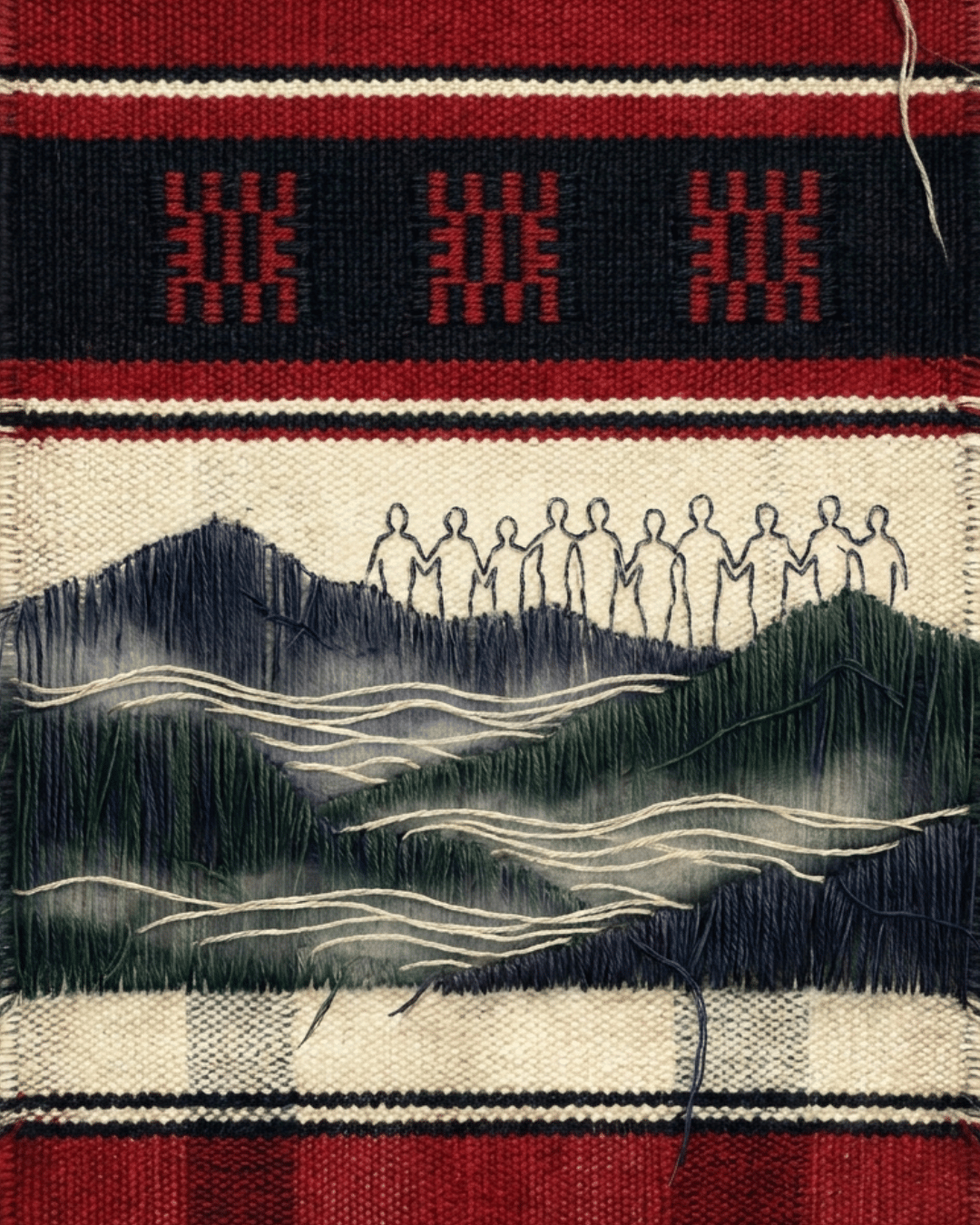

The road to Ukhrul is not a road in the conventional sense. It is a memory etched into mud, a winding path through lush green hills and dense forests where fog sits low, and silence carries stories. Perched near the porous Indo-Myanmar border in Manipur, India, Ukhrul is inhabited by the indigenous Tangkhul community and is situated in a geography that is both breathtaking and burdened. It is remote, yes, but more than that, it has long been exposed.
For those of us born here, the hills are not just landscapes. They are witnesses.
I grew up listening to whispers of footsteps in the night, the crackle of Indian Army boots, and doors knocked not with hands but with rifle butts. In the early 1990s, these whispers were not whispers at all. They were daily realities. And even after the 1997 Indo-Naga ceasefire, the echo of militarisation has never quite faded. It lingers in memory, in posture, in the way elders pause before speaking.
I write this not as an observer, but as someone shaped by these hills, by the silence that follows boots on gravel, and by the unspoken understanding that survival itself can be an act of resistance. This, in fact, is not just a story of conflict. It is a story of women, Tangkhul Naga women, who have stood at the frontline of survival, resistance, and dignity. Women who have held together families, negotiated with armed forces, buried the dead, and protected the living. Women who, in the absence of justice, became its closest approximation.
A Childhood Under Watch
In Ukhrul, the forest has always been both refuge and risk. Its thick cover provided a safe haven for Naga revolutionaries, but that same geography also drew a heavy Indian Army presence. To them, Ukhrul was not just a settlement; it was a suspected zone.
The result was predictable: constant surveillance, frequent raids by the Indian army, and an atmosphere of fear that seeped into daily life. I remember nights when my village, Khamasom, would fall unnaturally silent, broken only by the distant crackle of communication radios and the murmur of the Indian Army. Elders would stay quietly, their conversations low and urgent; children were not to cry loudly. Even laughter felt like a risk to life.
Village leaders and elders often bore the brunt of this presence. They were summoned, questioned, sometimes beaten, and accused of aiding the Naga revolutionaries by the Indian army simply because they lived in proximity to conflict. I witnessed it myself, men who carried the weight of our community being reduced to silence under coercion.
And yet, in all this, there was another force, quiet, unyielding, and often overlooked.
The women.
But home became a place under watch.
As children, we learned quickly when to stay quiet, when to disappear into the background, and when to avoid eye contact. We learned that the arrival of the Indian army could mean anything, from questioning to violence and detention or sometimes arrest. It was unpredictable, and that unpredictability seeped into daily life like fog.
This is a story of those women, the daughters of the hills, whose courage has shaped the moral backbone of the Tangkhul Naga community, even as militarisation and conflict have attempted to fracture it.
The Unseen Frontlines of Resilience
During times of heightened Indian army presence, it was often the women who stepped forward first. When the Indian army entered the village, it was mothers, daughters, and grandmothers who stood between them and the menfolk. Not because they were immune to violence, but because they understood the stakes.
I remember how, during Indian Army operations, it was often the women who stepped forward to confront soldiers, not with weapons but with words and presence. They formed human barriers, shielding menfolk from further arrest and violence. They demanded explanations. They bore witness. Their courage was not born out of fearlessness but out of necessity. When survival is at stake, silence is not an option.
In many cases, their presence acted as a shield.
They would gather in groups, confronting the Indian Army with nothing but their voices and their resolve. They questioned arrests, demanded explanations, and insisted on dignity. They did not always succeed, but their resistance disrupted the ease with which power could be exercised.
This was not organised activism in the formal sense. It was instinctive, rooted in responsibility. In Tangkhul Naga society, women carry the moral fabric of the community. When that fabric is threatened, they respond.
A Different Kind of Silence
The 1997 Indo-Naga ceasefire brought a shift, but not an end.
Open hostilities reduced, but militarisation remained embedded in daily life. Checkpoints remained, and surveillance continued. The psychological weight of decades did not disappear overnight. For a town like Ukhrul, the change was uneven. While large-scale operations decreased, the underlying suspicion persisted. The Indian Army continued to exert control, especially during periods of tension.
And tensions in Ukhrul are never far away.
And once again, the women step forward. But their role is not limited to physical protection. They are also the keeper of continuity.
In times when fear threatens to fracture community life, women maintain rituals, prepare food collectively, and ensure that social bonds are not entirely broken. These acts, though seemingly ordinary, are forms of resistance.
Militarisation does not only manifest in physical violence; it reshapes social and emotional landscapes. For Tangkhul Naga women, this has meant carrying multiple burdens.
They manage households in the absence of men who may be detained, hiding, or simply too fearful to move freely. They navigate the economic strain caused by disrupted livelihoods. They raise children in environments where uncertainty is the norm.
And yet, they also preserve continuity. Through songs, stories, and rituals, they ensure that identity is not lost. In the face of forces that seek to control and redefine, women anchor the community to its roots.
But this resilience comes at a cost. Trauma, often unspoken, accumulates. The emotional toll of witnessing violence, of living under constant threat, is profound. Yet, mental health remains a largely unaddressed issue in these regions.
Voices of the Elders
In Tangkhul Naga society, elders carry authority not just through age but through lived experience.
When asked about the role of women and the impact of militarisation, several elders from Ukhrul, those who have seen the arc of history unfold, offered reflections that capture both pain and pride:
An elder from Ukhrul once shared,
“Our women are the backbone of our survival. When the soldiers came, when our men were beaten and taken, it was the women who stood firm. They faced the guns with empty hands but full courage. Without them, many of us would not be here today.”
These testimonies are not merely reflections; they are acknowledgements of a truth that is often overlooked in broader narratives.
The Gendered Face of Conflict
Conflict is rarely gender-neutral. While men are often the direct targets of physical violence, women experience its ripple effects in complex ways. There have been instances, spoken of in hushed tones, of harassment, intimidation, rape, and violations faced by women at the hands of the Indian Army. These experiences are often underreported, constrained by stigma and fear of reprisal.
At the same time, women have organised. Informal networks, community groups, and church-based initiatives have emerged as spaces of solidarity. They document abuses, support victims, and advocate for justice, even when formal mechanisms fail. Their activism is not always recognised in mainstream narratives, but it is vital. It challenges both external oppression and internal limitations.
Between Tradition and Transformation
Tangkhul Naga society, like many indigenous communities, is navigating the tension between tradition and change. Women’s roles, while significant, have historically been bound by patriarchal norms.
Conflict, paradoxically, has created openings. As women take on expanded responsibilities, their voices gain weight. They participate more actively in community decision-making. They question existing structures. Yet, progress is uneven. Cultural expectations persist, and systemic barriers remain. The challenge lies in ensuring that the recognition of women’s contributions translates into lasting empowerment.
For communities like the Tangkhul Naga indigenous community, memory is both a burden and a tool. It holds pain, but also truth. Documenting experiences, through writing, testimony, and storytelling, is an act of resistance. Justice, however, remains elusive. Mechanisms for accountability are limited, often inaccessible. Laws that grant sweeping powers to security forces have created environments where violations go unchecked.
For those who grew up in the 1980s and 1990s in towns like Ukhrul, the experience of constant surveillance and periodic violence leaves a mark. It shapes how trust is built, how authority is perceived, and how identity is understood.
Women, in many ways, have been the primary healers of this trauma. They create spaces for conversation, for mourning, and for remembrance. They pass down stories, not to perpetuate fear, but to preserve truth.
For Tangkhul Naga women, the pursuit of justice is intertwined with the desire for dignity. It is about being seen, heard, and respected, not as subjects of control but as citizens with rights.
In doing so, they ensure that history is not erased.
A Personal Reckoning
Writing this is not easy. To speak of one’s own small town and village in the context of conflict is to reopen wounds. But silence is not neutrality. It is absent.
I come from a tiny village called Khamasom, known for both beauty and brutality. I have seen elders questioned, leaders beaten, and families live under the shadow of uncertainty.
I have also seen women stand firm, fearless, and unwavering, even today. Their courage is not loud. It does not seek recognition. But it is constant.
It means revisiting moments I would rather forget, the fear in our elders’ eyes, the helplessness of watching civil society organisations’ leaders being beaten and arrested, and the silence that followed. It means acknowledging that these experiences are not isolated, that they are part of a larger system.
But it also means honouring the strength I have witnessed, the women who refused to be broken, who stood their ground, who carried us forward. Their stories deserve to be told, not as footnotes, but as central narratives.
It is the way Tangkhul Naga women gather during crises. In the way they confront authority. In the way they protect without weapons.
They are, in every sense, the daughters of the hills.
The Courage That Endures
In Ukhrul and across the region, women redefined what it means to be on the frontline, continuing to navigate a complex reality, one shaped by history, conflict, and resilience. They are not passive victims; they are active agents of survival and change.
They are not just witnesses to history. They are its guardians.
For too long, the experience of communities in remote border regions has remained at the margins of national and international discourse. The stories from these hills are not just local; they speak to broader questions of human rights, militarisation, and indigenous dignity.
The story of Ukhrul, of Tangkhul Naga women, though tiny, deserves to be heard.
Not as an isolated account. But as part of a broader conversation about militarisation, identity, and justice.
Recognition does not erase trauma. But it validates experience. And in that validation lies the possibility of change.
As the mist settles over the hills of Ukhrul, life continues.
Children walk the same narrow paths. Elders sit in quiet conversation. And women, always, remain at the centre.
Holding, protecting, enduring.
Their story is not finished.
For the daughter of Ukhrul and for every Tangkhul Naga woman who has stood, and continues to stand, in the face of uncertainty, this is your story.
Further Reading
- Bit Iron. Manipur: Tangkhul Naga Women Intercept Firearms in Ukhrul District Amid Rising Tensions, Northeast Now, March 6, 2026. https://nenow.in/north-east-news/manipur/manipur-tangkhul-naga-women-intercept-firearms-in-ukhrul-district-amid-rising-tensions.html
- Prasanta Mazumdar, ‘Save the Peace’: Tangkhul women rally for Naga rights. Indian Express, November 14, 2024. https://www.newindianexpress.com/nation/2024/Nov/15/save-the-peace-tangkhul-women-rally-for-naga-rights
- Woryunrin A Shatsang, From ‘Bread and Peace’ to Wungvei, Women Carry Forward of Resistance. Ukhrul Times, March 8, 2026. https://ukhrultimes.com/from-bread-peace-wungvei-women-carry-forward-resistance.