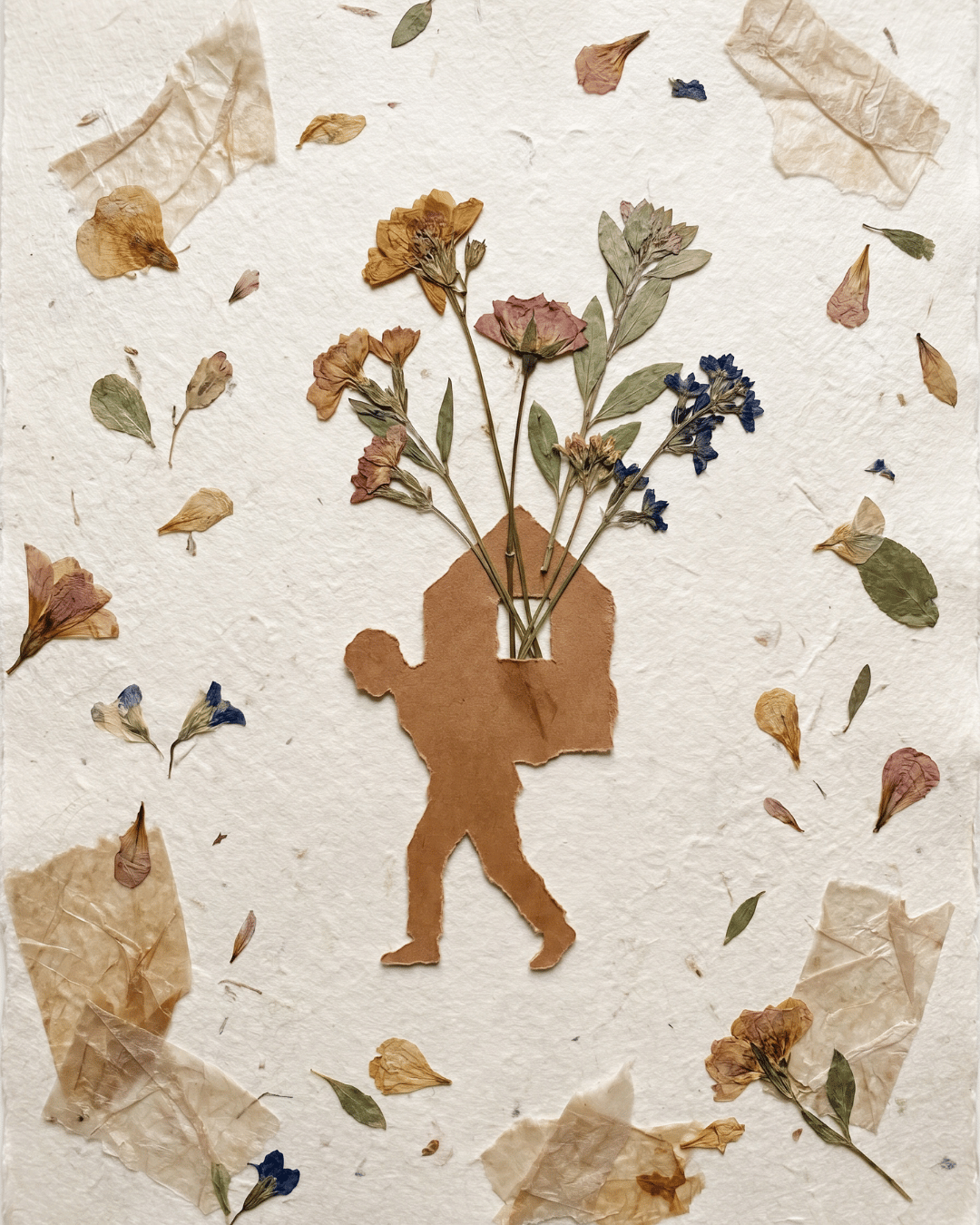

This article is based on reflections, discussions, and contributions collected during the training “Roma Youth Policy Influencers” organised by ternYpe - International Roma Youth Network, which brought together Roma youth from across Europe to discuss participation, representation, memory, activism, and the future of Roma communities. The voices woven throughout this text belong to the young people who participated in the training and shared their experiences, frustrations, hopes, and political visions for the generations to come.
There is a specific kind of silence that follows Roma youth into many of the spaces we enter. It is the silence of being spoken about before being spoken with. The silence of policies designed for Roma communities without Roma participation. The silence of watching institutions debate our realities while our voices remain absent from the rooms where decisions are made. Across Europe, Roma communities continue to face structural discrimination, segregation, racism, poverty, political exclusion, and the ongoing consequences of historical erasure. However, despite carrying a significant share of these realities, Roma youth continue to emerge as educators, artists, students, trainers, researchers, activists, and community leaders determined to reshape the future of their communities on their own terms. Today, being a young Roma person means navigating a constant tension between burden and hope, between resistance and pride.
“Responsibility.”
“Pressure but also pride.”
“Being at the decision table.”
“Resistance.”
“Being a role model for the future.”
“We are drivers of change, especially for the next generation.”
These reflections show a generation which is aware of both the historical weight it carries and the political responsibility it has inherited. Roma youth are not only fighting against exclusion; they are also attempting to create new pathways for participation, representation, and self-determination in societies that have historically denied them all three. For many Roma young people, activism does not begin through organisations or institutions. It begins much earlier, in classrooms where expectations are lowered, in public spaces where prejudice becomes normalised, and in everyday moments where survival itself becomes political.
“First of all I feel privileged and lucky, because there are people that cannot even afford to reach an education. Then also grateful. It is also a big weight on our shoulders.”
This contrast is obvious and deeply familiar among Roma youth experiences. Pride coexists with exhaustion. Representation coexists with pressure. Visibility often comes with the expectation to systematically prove one’s worth, legitimacy, and humanity. Roma youth often grow into advocates before they are allowed the space to simply be young. Success is rarely experienced individually, it becomes collective. Each achievement carries symbolic meaning for entire communities that remain underrepresented in political, academic, and public life. In this context, visibility becomes more than personal achievement; it becomes proof against centuries of stereotypes and dehumanisation.
“Recognition.”
“Sharing Roma pride.”
“Trying to transmit the necessity of change and the possibilities that we have in order to catch them.”
At the same time, Roma youth are refusing the idea that participation requires assimilation. Throughout generations, Roma communities were often forced into impossible choices: invisibility or punishment, silence or exclusion, assimilation or marginalisation. Young Roma today are rejecting this paradigm completely.
“We are changing, we are prepared, and we still want to be Roma.”
That statement captures a profound political shift taking place across Roma youth movements in Europe. Young Roma are demanding space within institutions, decision-making processes, and public discourse without hiding their identities, cultures, languages, histories, or communities in exchange for acceptance. In the context of oppression and erasure, diversity itself becomes resistance. Pride becomes resistance. Publicly and fiercely saying “I am Roma” becomes political in societies where Roma identity has historically been criminalised, stigmatised, and erased. To stand visibly as young Roma today is, in itself, evidence of how far Roma communities have come despite centuries of systemic exclusion. At the same time, Roma youth are not only preserving identity they are actively reshaping it. The younger generation is carrying forward Roma knowledge, culture, and political struggle through non-formal education, academic work, digital storytelling, oral history, activism, artistic expression, and international organising. Across Europe, young Roma are creating new narratives in spaces where Roma voices were previously absent.
“By learning and teaching others.”
“Digital oral history and cultural preservation.”
“Academic and institutional activism.”
“Introducing our narrative.”
“Through non-formal education.”
What emerges is a form of activism that is fundamentally intersectional and more aware of linked challenges. Roma youth are not only advocating for ethnic recognition. They are confronting sexism, economic exclusion, anti-migrant rhetoric, educational segregation, homophobia, and systemic racism all at once.