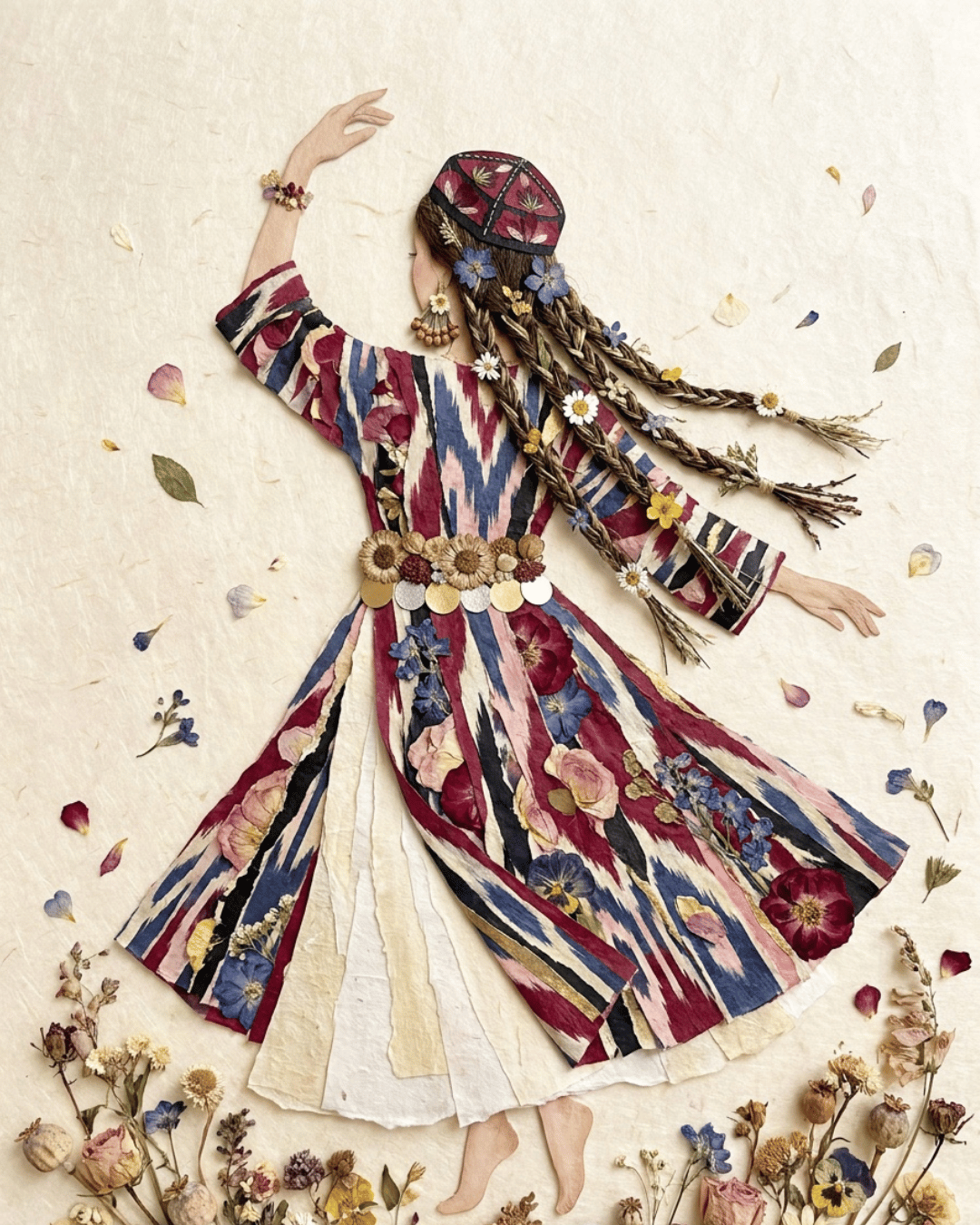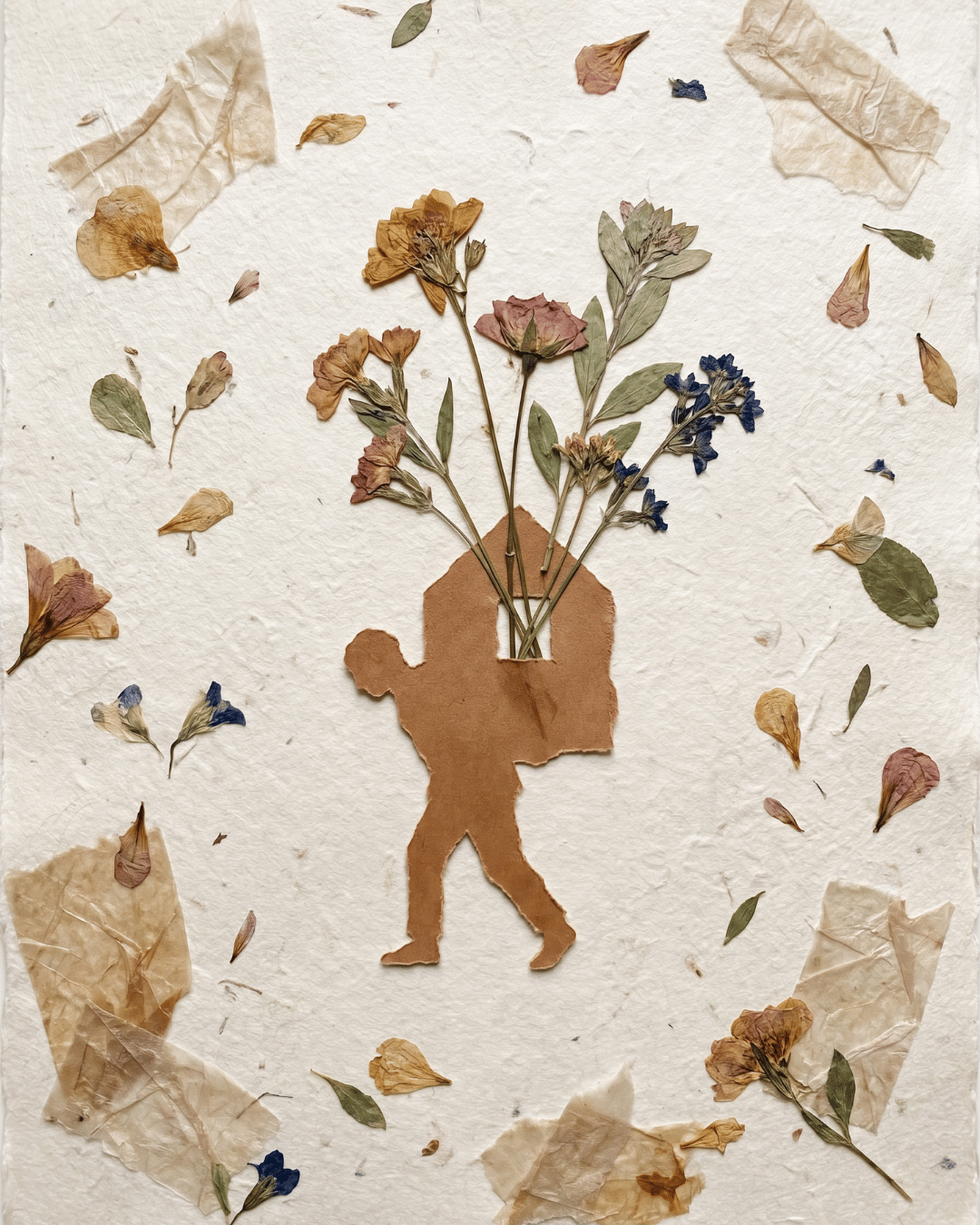

For many minority youths, belonging exists beyond borders.
In August 2024, young Romani activists from across Europe gathered in Krakow following a day commemorating the Roma genocide at Auschwitz.
By evening, the atmosphere had shifted. Back at the dormitory, participants wanted to play music together, but were told they could not use the speakers after complaints from the previous year. So instead, they created the music themselves. Someone retrieved a keyboard from the basement. Another brought out a violin and a clarinet. While they waited, Spanish participants filled the silence with a cappella flamenco, while others clapped along.
By sunrise, grief had transformed into music, dancing, and exhaustion.
For Adrian, a 24-year-old Romani youth from Germany belonging to the Gurbetliya tribe, it was one of the few moments he felt entirely at home.
“I never felt more at ease and at home than when I first got to meet other Romani youth from around the world,” he says.
“All different languages, religions, looks, you name it. Sometimes, the only way of communicating was Google Translate and gestures. But the ones I call my friends today accepted me like a cousin, a returned family member.”
For many young people, the question of where they come from is relatively simple. The answer may be a city, a country, or a language spoken at home. But for others - particularly youth from historically marginalized, displaced, or diasporic communities - the idea of home can feel far more complicated.
"Where are you from?"
For some young people, home is inherited before it is fully experienced. In songs carried across generations, or in places they have never fully known themselves.
When asked where he is from, Adrian says he has spent years learning how to answer the question carefully.
“I am a boy from the landside of Hessen,” he explains, “but my roots are from Kosovo and India.”
Over time, he says, he learned how to compress multiple histories into a single sentence. Yet even then, the answer often invites confusion. With his light skin and blue eyes, many assume he must be Italian, Polish, or simply German. Only later in the conversation does he mention that he is Romani - a revelation often met with unfamiliarity, stereotypes or misconceptions.
“People either think I mean Rome or Romania,” he says. “Or they already have a stereotypical image of Romani people.”
Romani people are one of Europe’s largest and most historically marginalized ethnic minorities, with communities spread across the continent and beyond. Despite centuries of presence in Europe, Romani communities have long faced discrimination, forced assimilation and exclusion.
"The places we inherit"
For Adrian, however, the idea of home has never been tied neatly to borders or political entities. Instead, it has been shaped through memory, family stories and fragments of places inherited across generations.
He recalls one story his father often told him from the Yugoslav Civil War. During a Serbian border control on his way to Kosovo, soldiers stopped his vehicle and accused him of potentially transporting weapons for rebels. In the back of the truck were only German furnishings intended for a house still under construction.
"Gentlemen, I am a Rom,” his father responded. “I know of no homeland or soil for which I would shed the blood of another human.” He then told the soldiers to search the entire vehicle.
“If you find anything else than home appliances - here is my head, kill me.”
The soldiers eventually let him pass.
For Adrian, the story captures a distinction that has shaped his understanding of belonging ever since.
“You could say,” he reflects, “he was ready to die for a home, but never to kill for a homeland.”
While nationalist ideas of homeland are often tied to territory, borders, and political identity, Adrian describes home in far more personal terms: the scent of bazaars his parents once visited, the sounds of street music during celebrations, football stadiums from childhood memories, and stories passed down long before he was born.
Scholars of migration and belonging have increasingly challenged the idea of home as something tied solely to geography. Instead, home is often understood as something shaped through memory, relationships, identity and experiences carried across generations.
At the same time, Adrian acknowledges a growing distance between himself and the places his parents once considered home.
“Today, I genuinely cannot consider the place they called home my home,” he says.
“My scent, sight and memories were created on the German landside, not the Roma quarters of Ex-Yugoslavia.”
Yet despite this distance, traces of inherited belonging remain.
"I find a bitter comfort and pride,” Adrian says, “in the fact that from Tehran to Buenos Aires this never hindered Romani people to build connection, heritage and appreciation with the places they dwelled in and the people they lived with.”
Similar questions of belonging appear across displaced and diasporic communities worldwide: from Tibetan youth born in exile to Rohingya youth growing up in refugee camps far from the places their families still call home. For many, homeland exists less as a fixed location and more as memory, inheritance, and imagination carried forward by younger generations.
"Like a returned family member"
Adrian says he first began to understand this sense of belonging when he started meeting other Romani youth from across the world.
Romani communities are highly diverse, shaped by different histories, cultures, and experiences across countries and regions.
For the first time, he found himself surrounded by people who, despite speaking different languages and growing up in entirely different countries, shared experiences that felt deeply familiar.
“I never felt more at ease and at home than when I first got to meet other Romani Youth from around the world,” he says. “Finnish, Spanish and Welsh Kaale, German, French and Dutch Sinti, Turkish, Brazilian and Ukrainian Roma - all different languages, religions, looks, you name it.”
Communication was not always easy. At times, conversations depended on Google Translate, gestures, and fragmented phrases exchanged across multiple languages. Yet Adrian says the sense of recognition often transcended words.
“But the ones I call my friends today accepted me like a cousin, a returned family member,” he explains. “For them, their heritage is my heritage, my struggle is their struggle, and vice versa.” Rather than existing solely within borders or territory, belonging emerged through shared memory, inherited experiences, and mutual recognition between people who often understood displacement, ambiguity, and cultural fragmentation in similar ways.
“I feel it when we exchange the stories of our hearts,” he says. “Whenever I hear a Flamenco song by a Spanish cousin, it reminds me of the words of my parents. Whenever I tell an English cousin about a silly superstition, they immediately recognize it.”
While modern societies often expect identity to fit neatly within categories of nationality, ethnicity, or citizenship, many diasporic communities exist across borders, languages, and generations simultaneously.
“Most importantly,” Adrian says, “whenever we see and acknowledge each other in our ambiguities, restlessness and ‘mosaic-ness’ in front of a world insisting on identity, borders and clarity, that is when I truly and altogether feel connected to my homes - my cousins.”
For many young people growing up within diasporic or historically marginalized communities, digital platforms and international youth networks have also transformed the ways belonging is experienced and maintained. Connections that may once have been limited by geography are now built across continents through shared activism, culture, and collective memory.
"Building Something Different"
At the same time, Adrian believes younger generations of Romani youth are approaching identity, activism, and belonging differently from those before them.
Much of this, he says, is shaped by history.
During the Second World War, hundreds of thousands of Roma and Sinti people were murdered during the Porajmos - the genocide carried out by Nazi Germany and its collaborators. Yet despite its devastating impact, many scholars and activists argue that the persecution of Romani communities has historically received far less recognition within mainstream European historical memory.
“The older Romani generation, especially in Europe, has been traumatized profoundly by the horrors of the Second World War and the genocide perpetrated against our community by the fascists,” he explains. “In our case, the Yugoslav Civil Wars come on top of it.”
For Adrian, his generation represents one of the first in over a century to grow up without directly experiencing an existential war crisis themselves. Combined with globalization and digital connectivity, this has fundamentally changed how many young Romani people interact with both their own communities and the wider world.
“That has given us the opportunity to create international active networks of engaged Romani youth,” he says, “being informed and connected with each other with the help of the internet.”
These digital spaces, he argues, have become increasingly important in allowing younger generations to create more autonomous portrayals of Romani identity while also building solidarity with other historically marginalized communities.
“That has also helped to create digital visibility,” Adrian says, “more autonomous portrayals of our culture and foster solidarity amongst each other and other disregarded communities.”
At the same time, Adrian emphasizes that preserving culture and identity also carries a significant sense of responsibility.
“Coming from a family that lived through two wars, survived deportation and forced labor, fled from ethnic cleansing, and is still silently struggling with assimilation and ethnic concealment,” he says, “I feel the strong responsibility to safeguard and recuperate the heritage that has been left to me.”
Yet younger generations, he suggests, are not only focused on preserving inherited traditions. They are also increasingly questioning inequalities both outside and within their own communities.
“My experience has been that the younger generation of Romani youth is more conscious about intersectional challenges,” Adrian explains, pointing to conversations surrounding sexism, queerphobia, disabilities, and discrimination based on religion.
“In this regard,” he says, “I’m really happy about the scrutiny young activists pay towards our own systemic injustices while not letting the external institutional racism of states off the hook.”
Despite these shifts, many challenges remain deeply entrenched.
“It’s unbelievably tiring and discouraging,” Adrian says, “to constantly experience how the existence of Romani people at a certain place - and may it even be that they have settled there for the last 500 years - is almost exclusively associated with estrangement, foreignness, savagery, delinquency or at best romanization.”
“If even they,” he says, referring to Sinti communities who have lived in Germany for centuries, “are denied basic commodities like citizenship or their right to equality before the law, how can I as a Muslim Rom with a migrant background ever dream of leaving my children a future Germany where they can live freely, equally, and emancipated?”
About the author
Nina Yaminah Daneshvar is a journalist and multimedia storyteller whose work explores identity, belonging, and underrepresented communities through feature writing and multimedia journalism. Born and raised in Norway, with roots in Sistan & Balochistan in Iran, she recently completed a BA (Hons) in Journalism at the University of Westminster and will begin an MSc in Politics and International Relations at SOAS University of London in 2026.