
There is a kind of silence every Uyghur child in the diaspora learns to recognise.
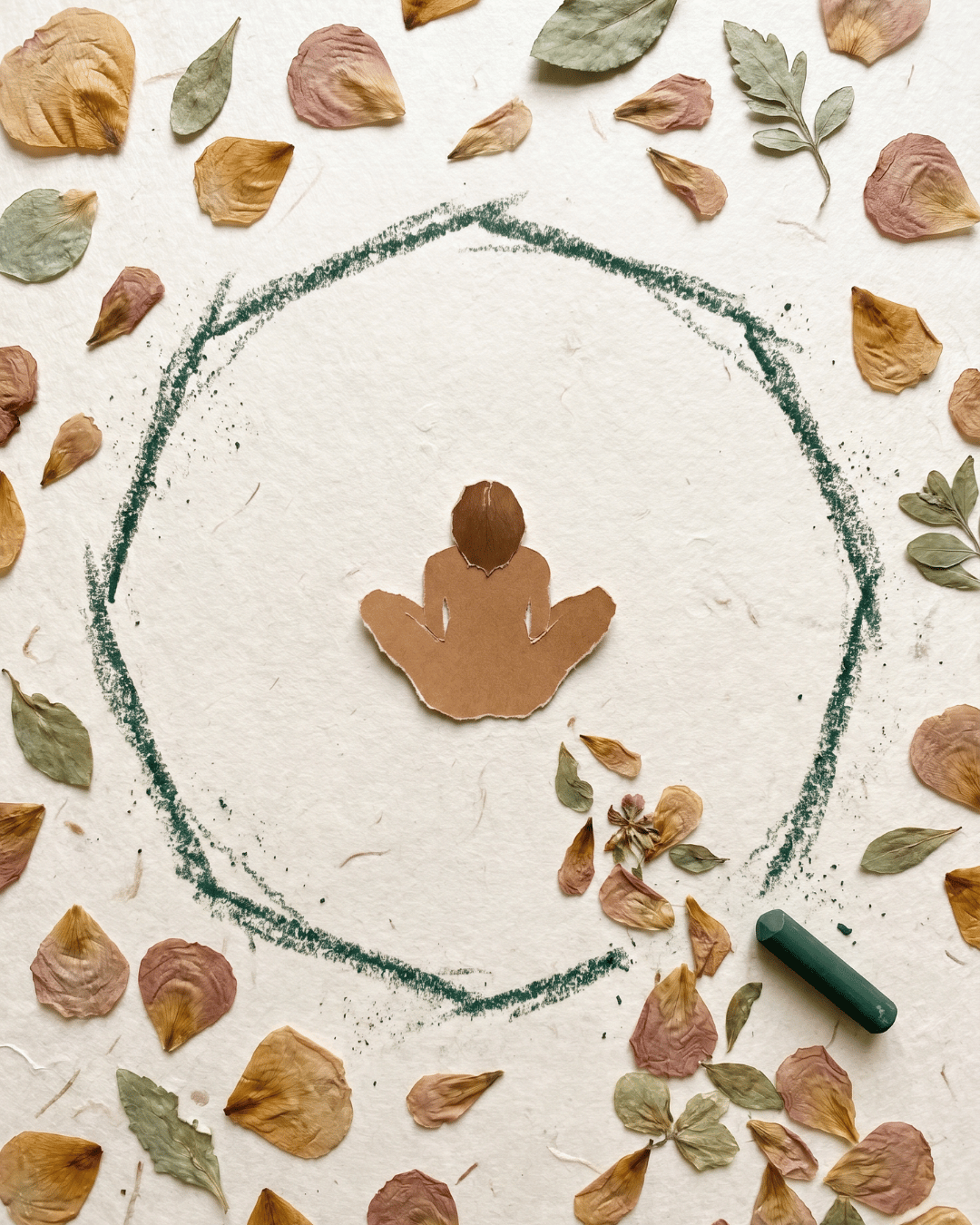
It does not arrive dramatically. It enters the room quietly, almost politely, and then begins to sit with the family. It sits between phone calls that used to be ordinary and then suddenly stopped, between names of relatives spoken more carefully than before, between the way adults lower their voices when East Turkestan is mentioned. Before I had the vocabulary for politics, I learned the language of absence.
For Uyghurs, children are life. Not as a slogan, not as something said for effect, but in the most everyday, intimate ways. A child is fed before the adults sit down. A child is kissed by every auntie in the room. A child is corrected when she forgets a word in Uyghur, not because anyone wants to be difficult, but because one syllable can feel like a small homeland. From babyhood, we are made to feel precious. Loved, yes. But also entrusted.
“Do not forget your language.”
“We are Uyghurs.”
“You must know where you come from.”
I heard these sentences so often that they became part of the furniture of my childhood, as normal as the smell of polo in the kitchen or my mother humming folk songs while cooking. At first, they sounded like affection. Later, I understood that they were also instructions.
We were called the future before we understood what was being taken from us.
I lived in our homeland until I was eleven, so East Turkestan was never only an idea given to me by longing. I remember it with my own senses. The fruits, for example, could make you believe paradise had a garden and someone had accidentally dropped pieces of it into our markets. The seasons there arrived with the completeness of old stories: winter turned the world white overnight, spring returned with green hills and blossoms, summer grew heavy with fruit and heat, and autumn laid gold over everything before handing the land back to cold. The mountains rose green and quiet. The lakes held the sky in silence. A Hami melon could be so large, so fragrant, so impossibly sweet, that eating it felt less like biting into fruit than stealing a spoonful of honey from paradise.
And there was music everywhere.
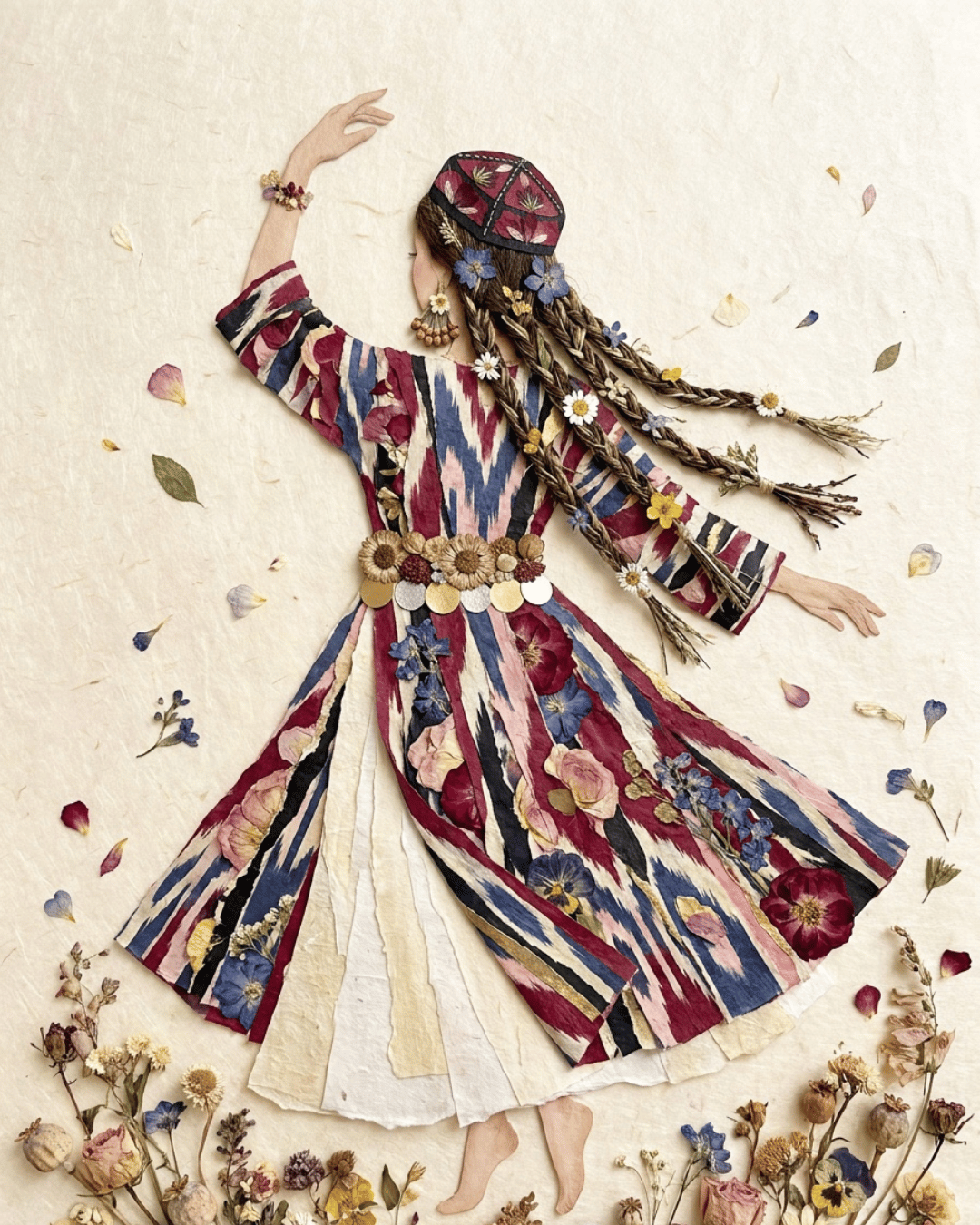
Uyghur culture does not simply include music; it breathes through it. The Twelve Muqam, one of the great classical musical traditions of our people, carries poetry, song, dance, and history in a way that feels both disciplined and wild. But music was not only something performed on stages. It was in homes, weddings, gatherings, kitchens, late evenings at a table with friends. Young people would sit together, eat, drink tea, play guitar, sing, and then someone would always begin to dance. Uyghurs love to dance. We do not only move our feet; we speak with our wrists, our shoulders, the tilt of the head, the small proud turn that says: I am here, and I know who I am.
Every Uyghur child knows the smell of polo, laghman, samsa. I sometimes think the smell of Uyghur food could tempt angels into breaking their discipline. Or at least make them ask for one small plate before returning to heaven.
This is the world our elders tried to give us. Not a perfect world, because no homeland is perfect when you have actually lived inside it. But a world full of texture: fruit juice on your fingers, songs in the background, elders telling stories, children running between chairs, women laughing in kitchens, men becoming sentimental after tea, and a people who understood beauty as something to be shared loudly.
That is why loss, when it came, did not feel abstract.
East Turkestan, referred to by China as Xinjiang, is the homeland of the Uyghur people and other Turkic peoples. In recent years, Uyghurs have faced mass detention, intrusive surveillance, forced assimilation, family separation, and severe restrictions on religious, cultural, and linguistic life. In 2022, the United Nations Human Rights Office concluded that the extent of arbitrary and discriminatory detention of Uyghurs and other predominantly Muslim groups may constitute international crimes, in particular crimes against humanity.
But for us, these words are not only legal language. They are what it feels like when a phone stops ringing.
Around 2014 and 2015, many of our contacts with relatives and friends in the homeland began to break. Not slowly enough for the heart to prepare itself. Suddenly. One day there was still a thread connecting us - calls, messages, small updates, the ordinary comfort of knowing someone was alive and how they were doing. And then it was gone. I remember the loneliness that entered our home then. My parents and I were not physically alone, but something had been cut. The silence was not empty. It was heavy with everything we did not know.
Uncertainty has its own cruelty. When you know someone is suffering, your pain has a shape. When you do not know, the mind creates a thousand rooms and walks through each one at night.
Perhaps my political consciousness began even earlier, though I did not know what to call it. I remember being a child in Ürümqi, maybe nine or ten years old, outside with my cousins and friends, eating ice cream. The others were speaking mostly Chinese, adding Chinese words into our sentences. I cannot explain why it bothered me so much in that moment, only that something inside me tightened. I said, “Let us stop speaking hitayche,” using the Uyghur word for Chinese. “Let us speak Uyghur.”
He said we should not say “Hitay”, but “Hanzu”, the Chinese term, because otherwise it was insulting.
I remember the feeling more than the exact words: confusion, anger, a small child’s sense that something was wrong before she had the tools to explain why. Why could I not use my own language’s word? Why, among Uyghur children, did Uyghur suddenly feel like something that needed defending? When I told my parents later, they gave me the child version of the explanation. “It is unfortunately like this,” they said, in the sad, careful way adults speak when they are trying not to give a child the whole weight of the world.
Years later, I would recognise that moment for what it was. It was not only about one word. It was about power entering language. It was about a child beginning to understand that identity can be managed, corrected, softened, renamed.
At twelve, I gave my first public speech about the Uyghurs in Bern, in front of thousands of people on the Bundesplatz. I was still a child, standing in a place where adults make decisions, trying to speak about a people many had barely heard of. I do not remember every sentence I said. I remember the feeling of my own voice leaving my body and not coming back the same.
Since then, activism became less an event and more a climate I lived inside. Demonstrations, speeches, translations, meetings, events, explaining, explaining again, becoming a bridge between Uyghurs and authorities, between pain and bureaucracy, between testimony and the language the outside world understands. In 2010, during my exchange year in Toronto, I joined Uyghur demonstrations after seeing videos from the aftermath of the Ürümqi massacre.In 2016, after seeing a video of a small Uyghur child being chained, humiliated, and beaten, something in me broke in a different way. I could not eat or sleep properly for days. It was no longer enough to care. I had to do more.
This is the strange thing about becoming a young activist in the diaspora: nobody hands you a manual. There is no elegant ceremony where someone says, “Here is your grief, here is your microphone, here is your calendar.” You simply begin. A protest here, a translation there, a speech you are too young to give but give anyway. Then one day you realise you have become the person people call when something must be organised, explained, translated, defended.
Meanwhile, you are still supposed to grow up.
To be a teenager is already a difficult little republic of its own. Your body changes, your thoughts become dramatic, your dreams change clothes every few months. Now add exile, genocide, family fear, culture, religion, Western society, and parents who are terrified that you might lose your way.
Many Uyghur parents in the diaspora carry a fear their children do not always understand at first. They fear we will become too Westernised, too distant, too unfamiliar to the world they came from. They fear we will forget the language, the manners, the prayers, the stories, the invisible codes that held families together for generations. Sometimes that fear becomes strictness. Sometimes it becomes conflict. But beneath it, there is love, and beneath the love there is loss. They are not only trying to protect their children from the outside world. They are trying to protect a whole world inside their children.
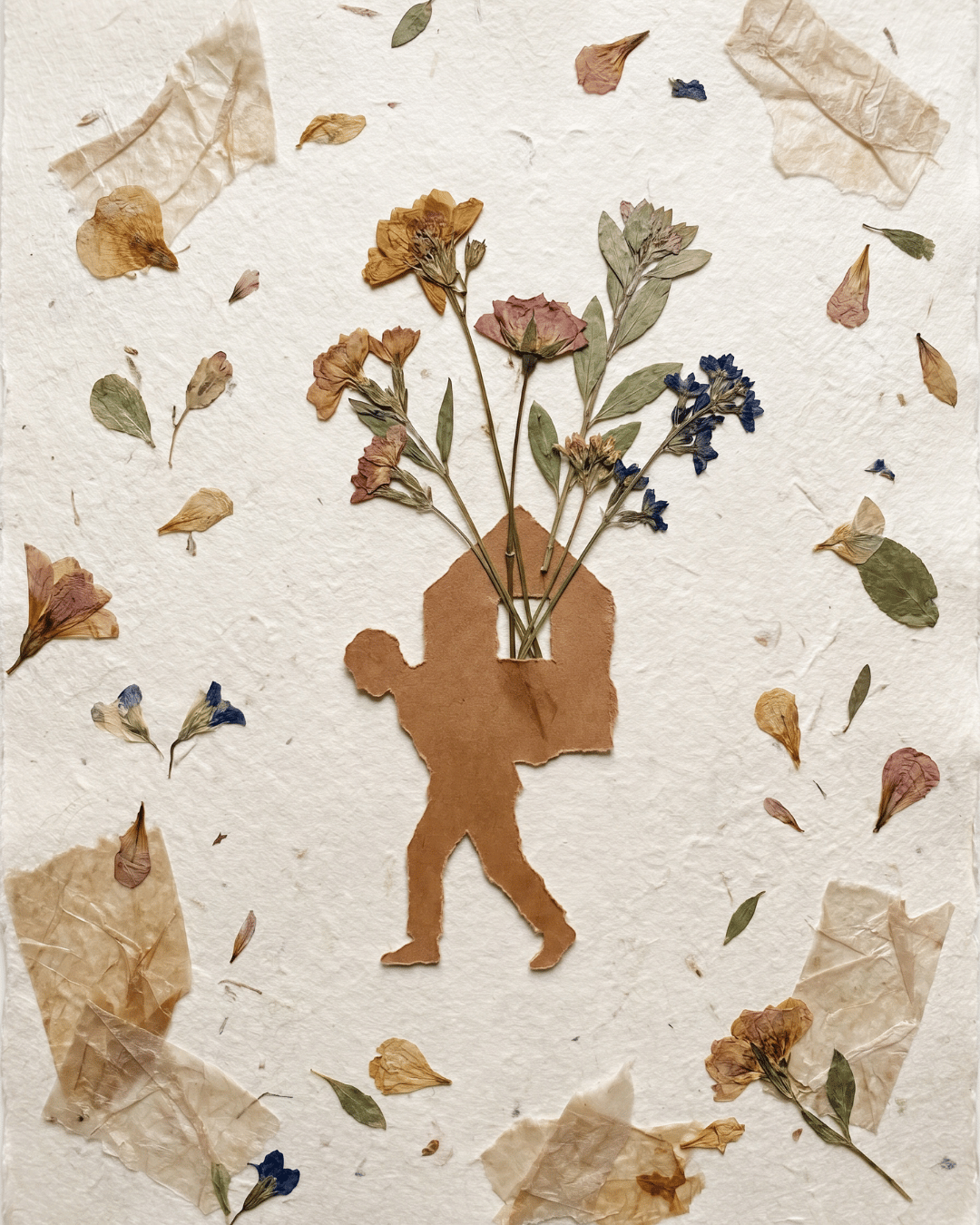
So we learn to live between rooms.
At home, we are told to remember. Outside, we are told to become ourselves. At home, freedom is often connected to responsibility. Outside, freedom is often imagined as independence from responsibility. We grow up with Western classrooms and Uyghur kitchens, individual dreams and collective memory, the wish to choose our own lives and the knowledge that our choices never feel entirely private.
I remember standing by the lake in Switzerland with friends on Swiss National Day. Flags everywhere. Fireworks over the water. People gathering with an ease I envied before I understood it. A flag on a balcony, a song in public, a country celebrated openly, almost casually. It was beautiful. It was also painful.
I thought: one day, we will have this too.
Some friends could not understand why it mattered. Why wave a piece of textile? Why care so much about a flag? To many people, a flag is only a symbol, sometimes even an uncomfortable one. But for a people denied the ordinary rituals of nationhood, a flag is not just fabric. It is memory folded into colour. It is hope you can hold in your hand. It is belonging made visible. It is the dream that one day the name of your homeland will not have to be whispered, explained, defended, or corrected.
The older I became, the more I understood that Uyghur youth are always balancing two forms of longing. The longing to be free as individuals, and the longing for our people to be free. We want to dance, study, fall in love, travel, build careers, waste time, make mistakes, become ridiculous and brilliant in the ordinary ways young people should be allowed to. We want lightness.
But lightness is complicated when you know too much.
You are at a party, or a dinner, or simply having a beautiful day, and then the thought arrives. Somewhere, at this exact moment, a Uyghur mother may not know where her son is. A young person may not be able to speak freely in their own language. A child may be growing up separated from family, faith, and memory. A girl your age may be forced or pressured into marrying a Han Chinese man, her body and future turned by the state into instruments of assimilation.Another may be behind the walls of a camp, where violence reaches even the most private parts of a person’s life. Someone may be watched for praying, punished for a message, silenced for a song. And you, safe in another country, are laughing.
There is a guilt in the diaspora that is difficult to name because it is not entirely rational. We did not choose safety at the expense of others. We did not create the violence. And yet the question appears in ordinary moments: how can I be happy?
For a long time, I think many of us tried to answer by working harder. More speeches. More meetings. More translating. More campaigns. More proof that we had not forgotten. But I have started to believe that survival cannot only mean exhaustion. A people cannot be kept alive only through grief. We must also keep alive the reasons our people wanted to live in the first place: music, language, food, humour, tenderness, dance, faith, friendship, family, beauty.
Uyghur youth today understand this in a powerful way. They move between worlds and, somehow, take the best of both. They use Western education, technology, social media, political systems, and global networks, but they return to Uyghur language, music, clothing, stories, and memory with new urgency. They organise conferences and make videos. They speak in parliaments and teach younger children dances. They create art from pain without letting pain become the only thing we are known for. Young women step into leadership even when it is difficult, even when it is uncomfortable, even when tradition and politics both ask them to be smaller.
In 2023, when I was elected president of the Uyghur Association of Switzerland, I thought again about that child in Ürümqi who only wanted her Uyghur friends to speak Uyghur while eating ice cream. She did not know where that feeling would take her. She did not know that one day she would stand in meetings, organise communities, speak to institutions, and carry questions much bigger than herself. She only knew, with the stubborn clarity of a child, that something was wrong.
Maybe that is where many movements begin. Not with theory. With a child sensing that something precious is being pushed out of the room.
For Uyghurs, children and youth are the future. But I no longer believe this should mean that youth must carry everything. It should mean that we build something worthy of them.
We need more than survival. We need rooms in which our language is not only defended, but spoken freely. We need stories that are not only testimonies of pain, but maps of belonging. We need a future in which Uyghur children, whether in the diaspora or one day in a free East Turkestan, inherit more than fear. They should inherit songs, names, jokes, recipes, dances, prayers, books, confidence - the ordinary wealth of a people allowed to live.
For me, this hope also has a concrete form. In Switzerland, I dream of a Uyghur community centre: a place where children can learn their mother tongue without shame, where elders can tell stories, where young people can turn memory into projects, campaigns, songs, films, books, and futures. A place where our grief does not have to stand alone because it is surrounded by culture, laughter, work, tea, and the smell of food that could still tempt angels.
I do not want Uyghur youth to inherit only longing.
I want us to inherit tools. Rooms. Institutions. Confidence. A living culture, not a museum of pain. I want us to know our history without being trapped inside tragedy. I want us to be able to celebrate one day without guilt, to wave a flag not only as resistance but as joy.
Until then, we continue.
Not because we are fearless. Not because we never get tired. Not because we were born stronger than other young people. We continue because love has made us responsible. Because our parents gave us their memories, and with them, their longing. Because somewhere between the songs in our kitchens and the silence of unanswered calls, we understood that identity is not something we simply inherit.
It is something we protect.
We were called the future before we understood what was being taken from us.
Now we are learning how to become the future without letting ourselves disappear.
About the author
Rizwana Ilham studied Economics and Languages and has been engaged in human rights advocacy since her teenage years. Since March 2023, she has served as President of the Uyghur Association of Switzerland, where she works to strengthen support for the Uyghur community through public advocacy, demonstrations, institutional dialogue, partnerships with human rights organisations, and participation in panels and public discussions.
In this role, she acts as a bridge between the Uyghur diaspora and Swiss institutions, representing Uyghur interests and raising awareness of the ongoing human rights crisis in East Turkestan. She is also active in international Uyghur youth advocacy and was elected Director of the Youth Committee of the World Uyghur Congress, where she has organised numerous youth events, supported emerging activists, and mentored young Uyghurs in the diaspora.