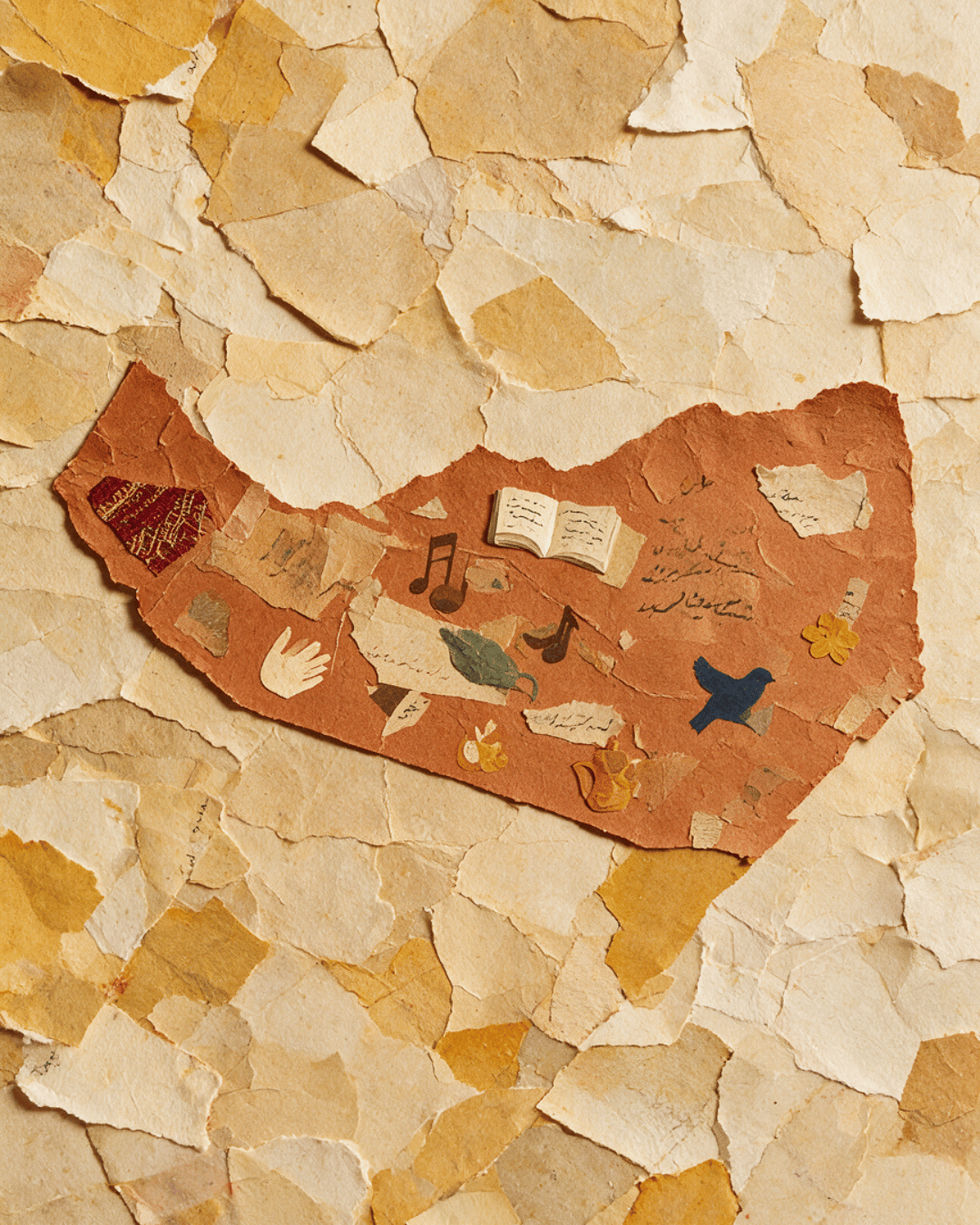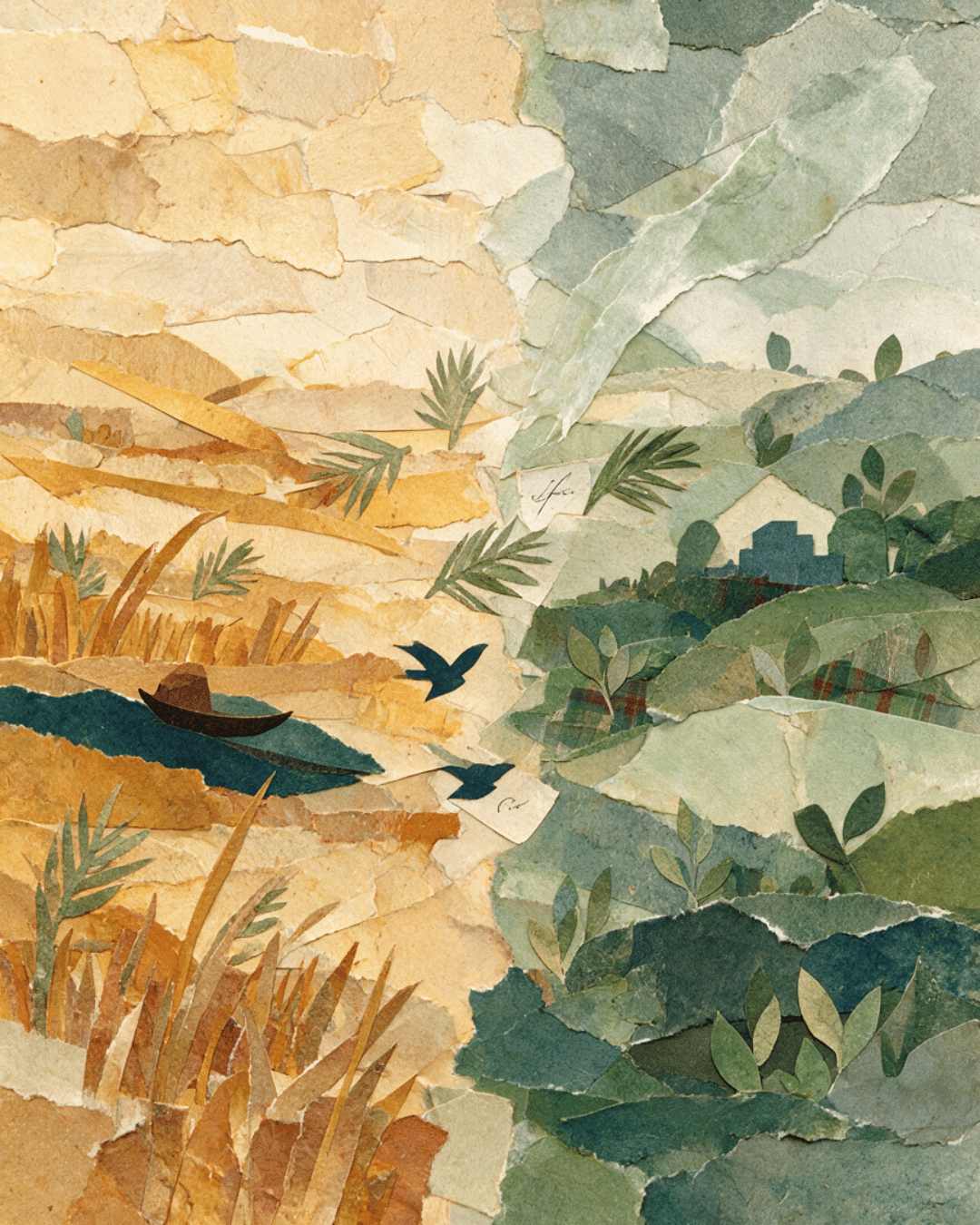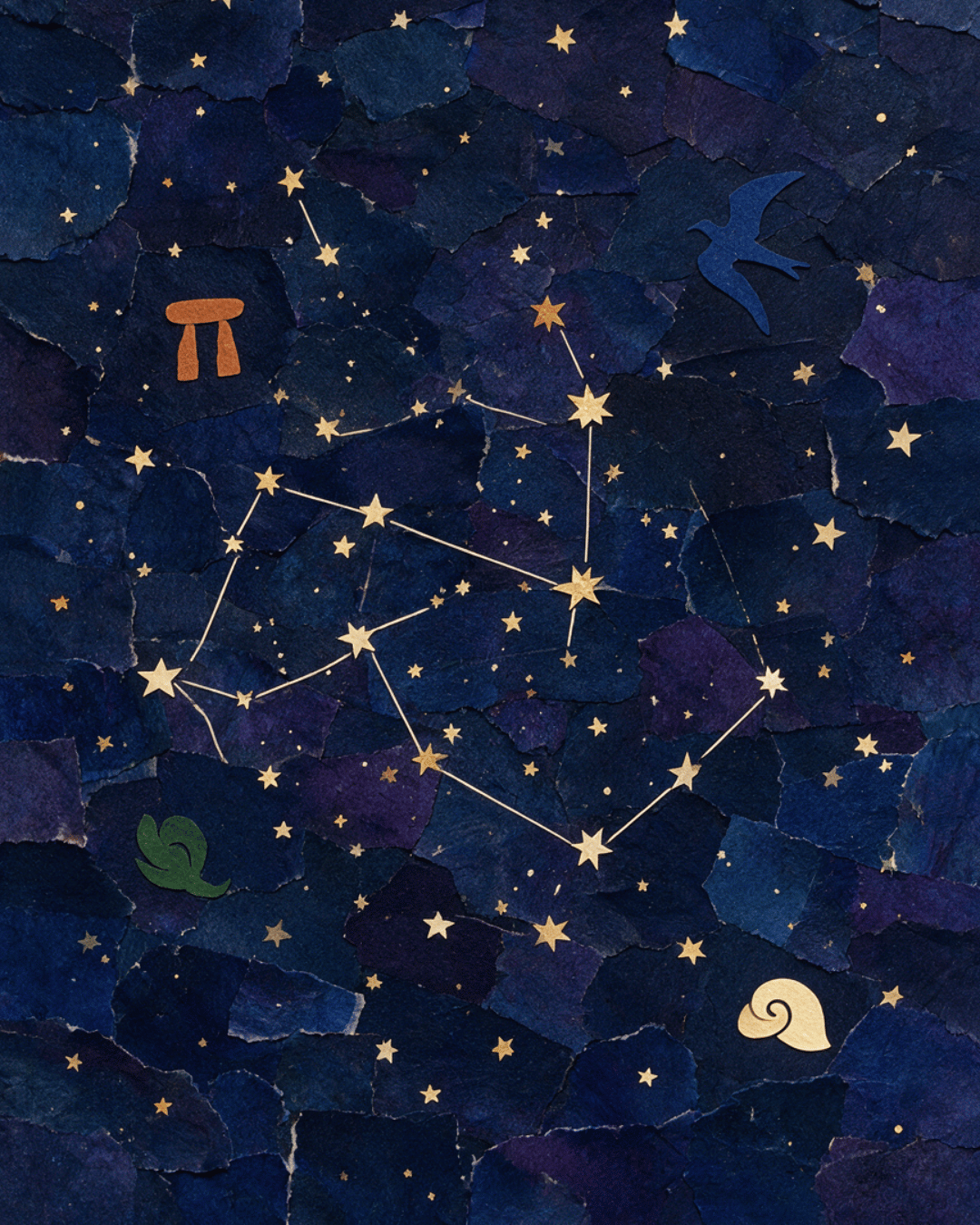

My ancestors are reputedly great seafarers and skillful navigators.
The First People of the archipelago of Laguas and Gåni, now known as the Mariana Islands, were among the earliest to traverse the uncharted waters of the island Pacific to create a new homeland for themselves. They travelled in their seaworthy vessels from the Southeast coastal islands of Asia to populate Oceania. Guam’s Taotao Tåno’ began settling permanently around 3500 to 4000 years before present. Modern CHamorus are the descendants of these ancestors. Recent comparative human genome studies confirm that we share distinctive DNA that connects us through nearly three millennia to human burials found in archeological settlements dating back at least 2500 years.
Time has its markers. Major events perpetrated by colonial empires have circumscribed our journey as the people of this land. Historical dates were surely an enigma for a people, whose sense of time in space spanned thousands of years in seamless cycles of mo’na yan tåtte, ahead and following. Reckoning time in linear fashion had to be learned. Magellan’s stopover in 1521 marked the beginning of the end of an arcadian way of life for the indigenous inhabitants of Guam and the islands to the north.
Imagine that day, five hundred years ago. It was probably bright and sunny. Breezy as March days tend to be. The ocean was glistening. Puffy white clouds speckled the blue sky. The beautiful four petaled guåsale’ covered the limestone cliff lines that buttressed high above the shore, testaments to the volcanic origins of the largest of the Laguas and Gåni Island chain. Birds of incredible beauty and song filled the air with sounds we can only dream of now. They had such poetic names as Pulattat , Åga, Fåhang, Égigi, CHuchurika and Sihek Guåhan. The oceans, unpolluted, were teaming with fish and other aquatic creatures. There were no mosquitoes or brown tree snakes. Those pests snuck ashore aboard ships from distant origins. This tranquil, idyllic scene of our past conjures a paradise that we in our own lifetime catch glimpses of in sacred moments when we pause to bask in the beauty of our island homeland with its spectacular sunrises and sunsets.
The Taotao Tåno’ of the 16th century, were a robust, healthy people. They were highly skilled in the arts of traditional navigation, seafaring vessel construction, pelagic, reef and shoreline fishing, stone technology, pottery-making , carving, weaving, and rice growing. How do we know? The Taotao Lågu or voyagers from the West have described the Taotao Tåno’ this way consistently in their chronicles.
These first written accounts of the latte builders also described a social order based on a three-tiered caste system comprised of the Mataó (må’gas taotao) the Atchå’ot and the Manå’chang. It is not far-fetched to imagine that most members of the Mataó likely viewed the Christian notion of equal status in God’s sight as a menacing belief. To be lumped together as one category of people devoid of a well-guarded social order must have added insult to injury to the maga’håga and maga’låhi of the time. The matrilineal kinship system and standing that women had in their clans was largely ignored. This must have been devastating and humiliating.
Storytelling rituals were observed by early chroniclers. As with oral traditions among First Nations throughout the world, dances and chants memorialized values and the telling of the journey of our people. Children learned the wisdom of the taotaomo’na (those who walked before) through their elders, who engendered a sense of awe and profound respect for ancestral spirits.
It was reported that the latte dwellers revered the skulls of their ancestors. This strong tie to the remains of close kin and their burial sites is still pervasive in current CHamoru cultural practice. It is not uncommon to visit the graves of family members on a regular basis throughout the year.
To European sailors, whose cultures were largely male-controlled and patrilineal, the matrilineal kinship system with shared power and authority between high-ranking females and their high-ranking brothers in the clans was unfamiliar and disturbing. They took great care to describe the power that women yielded and were fascinated by the sexual liberation of the “indios”.
To be sure, there must have been unresolved disputes in the clans. The caste system revealed a social order where some were advantaged at the expense of others. It wasn’t perfect, but it was as close to paradise as one can imagine. Our ancestors had sovereign freedom. We do not. Their food sources, water and air were not contaminated by chemicals. They controlled their daily life and practiced their beliefs and customs without interference.
They suffered the catastrophies of nature – typhoons, tidal waves, earthquakes – as we do. They were strong and resilient, as we are. Harmony ranked highly as a cultural tradition. They resolved conflicts following cultural practices that gave continuity to a largely peaceful way of communal living. All relationships were based on an elaborate system of kinship, exchange and reciprocity. While remnants of this system are still practiced today, we have gradually lost the “other-centeredness” which informed all social interactions.
There have been many voyagers to our shores since 1521 who plied oceans and pillaged continents to acquire wealth, power and prestige. The first among them earned Guam the dubious reputation of being sullied. In the words of Pacific Historian, Douglas Oliver, “ the rape of Oceania began with Guam.”
They sailed as conquistadors, missionaries, explorers, whalers, pirates, and pioneers in search of a new life. These waves of foreign men and their companions brought smallpox and influenza. They deposited their DNA into our genetic pool. Some stayed and established families and businesses. The truth is, so much blood has intermingled in the past five hundred years that it is impossible to separate our genetic selves from those who came to colonize us. Their language is sprinkled in ours. We carry their names, their genes, their faith; yet, we remain the people of this land.
How have we maintained our indigenous identity sandwiched between two world powers who were engaged in ruthless empire building that is the clarion call of colonizers?
How is it possible to integrate one’s cultural self with such contradictory forces tugging for attention and threatening to pull culture and identity apart?
I have looked at this issue through many prisms as a blood daughter or hagan håga’, a sociologist, a revisionist historian, a storyteller, and now as an elder or saina. My journey into legitimate, authentic wholeness has not been without great struggle. The constellations represented in my navigational chart may be unique to my experience, but they do reveal a passage that many CHamoru people have traversed and survived.
My journey began as an unconscious self. I wasn’t aware of colonization or about the historical events that shaped the Guam I was born into in 1950. I didn’t know about World War II and how it devasted my island and caused irreparable damage to my people. I didn’t know about eminent domain and about how the U.S. military took most of the arable lands in Guam after the war for its installations, including the most pristine beaches and fenced us out. We didn’t learn about our history and people at school. In fact, we were fined for every CHamoru word we spoke. We were reminded daily to speak English as good Americans should.
I knew my dad was a statesider and that he was white, blond and blue-eyed. My mom was local and she was tan with dark brown eyes and black hair. Children at the elementary school I attended teased me for being so pale. I had dark hair and eyes but I was light-skinned. They called me half-caste.
I didn’t know what that meant, so I asked my Nåna (maternal grandmother). She spoke only CHamoru, no English, so she didn’t know what it meant either. After she and my mom spoke about it, Nåna sat me on her lap and explained that it didn’t matter what I looked like, my bloodline was CHamoru. “CHamoru hagå’-mu ginen as nanå-mu.” I didn’t know it then, but she was referring to my uterine connection with her. She told me that a woman could never be half pregnant. You were either pregnant or you weren’t. Using this analogy, she made certain that I understood her message. I was a whole person, with a whole identity.
That was good enough for me to understand that my CHamoru identity could not be divided up like a pie into parts. My parents explained how we had a rich blended cultural heritage. All CHamoru children did, they assured me. Dad’s cultural heritage was English and German and mom’s was CHamoru and Spanish. I was young and innocent. I didn’t question such things any further at that time in my life.
While I was growing up, the term Guamanian gained ascendency. It applied to the people of Guam after WWII. CHamoru people were given American citizenship and were exhorted to get rid of the practices and traditions that were rooted in our Spanish-Catholic colonial heritage. The Americanization of Guam was in full swing. An English-only policy was strictly enforced in Guam schools. Fortunately, my dad was a wise man who saw the fallacy in this colonial policy. Dad was a universalizing force in our home. He insisted that we learn our indigenous language and values and that we practice CHamoru customs and traditions as an integral part of our family life. Nåna, as the matrilineal head of our clan, was the central source of my knowledge about CHamoru culture and identity.
I believed in my Nåna’s explanation of who I was, but people around me would continue to call my legitimacy into question. This is when I entered my fractured-self phase. As an emerging adult, I learned about how my grandfathers on both my Nåna’s and Tåta’s side were political administrators and operatives of the Spanish government. I knew that my dad came to Guam as a Naval Officer to assist in the rebuilding of Guam after the U.S. bombed Hagåtña to smithereens and destroyed our centuries-old city capital.
All of that legacy was flowing through my veins. Fortunately, I was reared by my Nåna and her widowed sisters during much of my growing up years, a practice we call pineksai biha (reared by elders) so I was culturally anchored. I just didn’t know it. We simply didn’t talk about culture and identity back then. We simply lived it!
Dad patiently taught us about island history, the intricacies of tropical flora and fauna and showed us how to value the land and its beauty. We often sat on the retaining wall surrounding our home overlooking Hagåtña with our feet dangling to watch the majestic sun rise and set over the ocean. We waited for rainbows that would streak across the sky after a light rain, as we listened to the plants and trees whisper to each other in the breeze. As he was determined that we would know our homeland intimately, he became our consummate tour guide. We were forever trapsing through jungles in search of rare plants. He pointed out sacred burial sites and remnants of latte villages as we trailed after him, smitten with curiosity about the natural environment we called home.
Mom taught us about loyalty to family, faith in God and His Mother, and to be proud of our culture and way of life. She was the disciplinarian. One look and we got the message.
Then, I went to college in Boston. I soon realized that I had neatly sorted out all my identity issues into small compartments in my head that didn’t bump. College shook things up quite a bit. The compartments collided. Everything spilled over and was oozing. I thought I knew what it meant to be an American citizen, until I went to the United States. All hell broke loose in my head, as I tried to answer the questions that kept coming at me. “Who are you? What did you say you were? What, I have never heard of them.”
When I’d try to answer their questions with “I’m a CHamoru from Guam.” I would immediately be asked, “Guam, where is that?”
In retrospect, it didn’t help that I wore very colorful, attention-getting tropical style clothing that was ill-fitted for a very conservatively dressed New England town. I cooked rice in the kitchenette of our dorm and recooked the cafeteria food with hot pepper and soy sauce to make it palatable. I hugged all my friends who grew up in no-touch environments. I was different. My mom sent me mangoes and floral print muumuus, my classmates got chocolate chip cookies and sweaters.
It was 1968. The Vietnam War was escalating. It was incredulous to me that Americans didn’t know where their B-52’s were taking off from. Why would they know about Guam, I tried to reason with myself privately. Just because I learned the names of every U.S. state and all their capitals by the time I was in third grade didn’t mean that my classmates were taught the names of the islands they colonized.
I vacillated from being identity proud to being identity frazzled throughout my college years. I joined the International Students Association and became its president in my sophomore year. I discovered that I had more in common with the students from Vietnam and Biafra than from New York or DC. I tried to do as many of my class projects about Guam as I could. My dad, who had studied at Princeton and M.I.T., was my lifeline to information which he would mail to me regularly. No email or computers at that time.
No matter how hard I tried to fit in with the norm, I had to repeatedly clarify who I was and where I came from. I just couldn’t bear the: “You speak English so well.” and in the same breath, “Do you speak English there?” Or “Where did you buy your clothes; do you miss your grass skirts?” “I could never have guessed you were from such a primitive place, you barely have an accent.” “You can’t be native; you look too civilized.” Such talk exhausted me and constantly wore down my sense of equilibrium. My psyche was under siege.
Then, I went to England to study through a Dickensian scholarship. I loved the rich historical traditions and pageantry of the royals. The constellations on my identity navigational chart represent mind-changing experiences I have had in my life about who I am. Some have been major moments of awakening. Such was my Trafalgar Square encounter. It was cold and rainy. I had gotten out of class at St. John’ School of Art in London and was headed to the British National Museum with the two huge lions standing sentinel.
Wet and shivering, I rushed through the turnstile and collided with someone who was making his way out. “So sorry”, I muttered embarrassed, as I pulled off my hood and stood dripping in the foyer. All of a sudden, my bobby pins holding up my knee-length hair flew out. I was a mess. The man I bumped into kindly said, “Let me help you, why don’t we go to the tearoom and get you a nice warm cuppa.”
He was meticulously dressed in a three-piece suit and wore tantalizing cologne. I appreciated the tea but began to feel uncomfortable as he stared at me. “I have to go, thanks for the tea.” He stood up hurriedly and said, “wait, let me explain” He was a physical anthropologist studying crania at the Museum and wondered if he could touch my face. ”My face?”, I asked suspiciously. “Please, you see I can’t tell your exact ancestry, but I know you are from near the Philippines. Am I right? If I could touch your cheekbones, I would have a better idea.”
Now, he had my full attention. I sensed that he was genuine. I nodded. He reached out and put his fingers on my cheekbones and my brow. He said, “Definitely the Mariannes, Guam perhaps?!” “Yes” I managed in excitement. Oh my God, this was like a big dipper type of discovery. He was elated at my joyous response. “Thank you, I have never met someone from the Mariannes before, excepting of course the skulls I’ve had the fortune to examine.”
Honestly, all drama aside, that was mind-blowing for me. It was a moment of true awakening. I was really connected to my ancestors below the surface, where it mattered. A perfect stranger knew me better than I knew myself. I felt legitimized. This was a huge breakthrough in my consciousness about culture and identity.
I had spent years explaining to people why I spoke English well, why I was a light-skinned islander, why I looked Spanish, why my mother’s surnames were Calvo and Torres. I was always trying to assert my indigenous identity, while never knowing quite how to articulate who I was. Who would have thought that when I was at the furthest point that I had ever been from home, I would discover an affirming truth about my real identity.
In the flash of a rainy day, my CHamoru identity was validated by a scientist who never met a living CHamoru before he met me. He knew who I was because he had touched the skulls of my ancestors. He revealed a profound connection between me, my cheekbones and my lineage. In the course of a few minutes, he cut through the superficial exterior of my being to expose my inner self. I felt an incredible sense of belonging. I was at home in my skin. That encounter straightened me out. Like Nåna in her own way, he reminded me that genes don’t lie.
After much reflection and reformulation, I have reached a very comfortable stage in my identity which I call assertive consciousness. I realize that we, as CHamoru people, can’t wish away those colonial parts of us that are filled with curses and blessings. To do that would be to discredit our journey and diminish who we have become.
We can only make sense of who we are, as an indigenous people, by recognizing the essential links that tie us to our past, enliven our present and inspire our future. So long as we speak our language and practice our values, customs and traditions, we can claim our authenticity among the cultures of the world. We will continue to be the Taotao Tåno’, the people of the land.
About the Author
Dr. Laura M. Torres Souder is President and CEO of Souder, Betances and Associates, Inc. Dr. Souder earned her BA at Emanuel College in Boston and her MA and PhD in American Studies from the Universityof Hawaii as a Joint Doctoral Intern at the East West Center. She completed a post-doctoral Ford Foundation Minority Fellowship at De Paul University in Chicago. Laura has presented at Conferences throughout Micronesia, Asia and the South Pacific and has been part of research efforts sponsored by the South Pacific Commission, UNESCO and other entities on the effects of modernization and development on Pacific Island people, language and culture. She has written an historical monograph by the Micronesian Area Research Center (MARC) at UOG, which was republished as a 40 th Anniversary 3 rd Edition in March 2024 as Daughters of the Island, CHamoru Women Organizers and Other Writings.
Dr. Souder is a MARC Research Associate at the University of Guam, where she taught Guam History and distinguished herself as a leading CHamoru Revisionist Historian. Laura was co-editor of Chamorro Self-Determination and has also recently co-authored four books with Dr. Samuel Betances, her husband, in aseries entitled, Island InSights. She is a featured columnist for the Guam Daily Post. She was recently recognized by the Guam Women’s Chamber of Commerce as the first CHamoru woman to have published a book. She currently serves as the Chair of the Guam Indigenous Heritage Alliance and the Kumisión i Fino’CHamoru yan i Fina’nå’guen i Historia yan i Lina’la’ i Taotao Tåno’