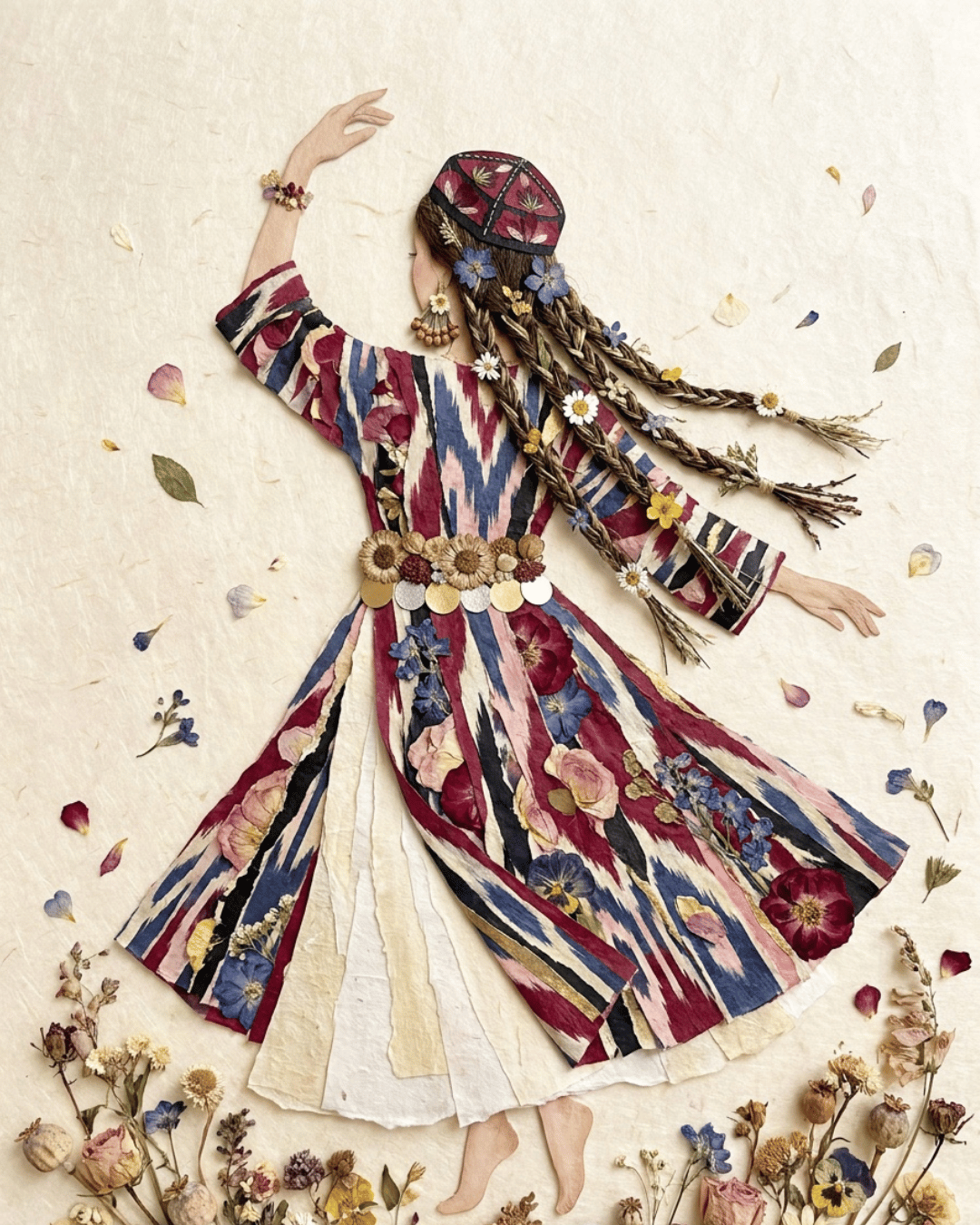

As an Ahwazi Arab, I have often found myself thinking about belonging and my sense of home and identity long before I had the language to describe it politically. Long before I encountered Hannah Arendt and her idea of the “right to have rights,” I already understood what it meant for rights to feel fragile. Although I was born and raised in the United Kingdom and hold British citizenship, my understanding of identity was always shaped more strongly by my connection to Ahwaz, its history, and the experiences of Ahwazi Arabs living under repression in Iran. In many ways, this distance complicated my relationship to belonging even further. I grew up physically outside Ahwaz, yet emotionally tied to a people whose cultural and political existence has continuously been challenged.
When I later read Arendt’s discussion in The Origins of Totalitarianism, for one of my classes, her argument felt unsettlingly familiar. Arendt challenges the assumption that rights are naturally universal, arguing instead that rights only truly exist when someone belongs to a political community willing to recognise and protect them. She writes that “the calamity of the rightless is not that they are deprived of life, liberty…but that they no longer belong to any community whatsoever.” Reading this as an Ahwazi Arab forced me to think differently about what political belonging means. I realised that exclusion is not always as visible as statelessness. Sometimes it exists more quietly, through restriction, erasure, and the constant feeling that your identity is treated as suspicious or inconvenient.
Arendt mainly writes about stateless people in the aftermath of the Second World War, yet her work extends far beyond those historical circumstances. What struck me most was her argument that the loss of rights begins with the loss of meaningful political recognition. Rights become fragile once a state stops viewing a group as fully deserving of protection. This resonated deeply with my understanding of Ahwazi identity because the experience of exclusion does not always come through formal removal of citizenship. Instead, it can emerge through the slow erosion of culture, language, and political voice while citizenship technically remains intact.
This is something I have continuously reflected on in relation to Ahwazi Arabs in Iran. Ahwazi Arabs live mainly in Khuzestan Province, or Al-Ahwaz as it is known by many of its indigenous inhabitants, a region rich in oil and natural resources yet marked by long-standing political and economic marginalisation. Discussions about Ahwazi Arabs are often reduced to statistics, security concerns, or geopolitical issues. I remember feeling proud to read that Ahwaz was the most polluted city in the world in 2005, because atleast it was recognised for something! However, my connection to Ahwaz has always felt far more personal than that. It is tied to heritage, memory, language, items and the awareness that an entire culture often exists in tension with the state surrounding it.
One of the most painful forms of this exclusion is cultural erasure. Arabic survives strongly within Ahwazi communities, in homes, poetry, music, and memory, yet outside those spaces it can suddenly become politicised. The restriction of Arabic education and limitations placed upon cultural expression create the feeling that Arab identity is something that must constantly justify its own existence. Even traditional clothing such as the thobe or keffiyeh can become politically charged rather than simply cultural. Over time, this creates an exhausting awareness of visibility, where ordinary expressions of identity feel loaded with risk.

Economic marginalisation also shapes this experience deeply. There is a painful contradiction in knowing that Ahwaz is one of the most resource-rich regions in Iran while many Ahwazi communities continue to face poverty, unemployment, displacement, and environmental neglect. The land itself is economically valuable to the state, yet the people indigenous to it often feel disposable. Reflecting on this contradiction made me realise that political exclusion is not only symbolic or cultural, but material. It shapes everyday life, opportunities, and the ability to imagine a future with dignity.
At the same time, political repression reinforces this fragility of belonging. Ahwazi activists, journalists, and advocates who speak openly about minority rights have repeatedly faced arrests, intimidation, imprisonment, and execution within Iran but also abroad through reprisals. Witnessing this creates a particular kind of fear because it sends a message that political visibility itself can become dangerous. This comes in the form of threats online, fearing for my family’s safety back in Iran and my constant fear of falling victim to reprisals. It reinforces the idea that rights are conditional, dependent not on universal principles but on how threatening the state perceives your identity to be.
Reading Seyla Benhabib alongside Arendt complicated these reflections even further. Benhabib argues that rights depend upon recognising others as members of humanity and that belonging itself should be treated as a moral claim, not merely a legal one. I found her argument compelling because it pushes beyond Arendt’s more pessimistic framework. Yet I also struggled with its optimism. Morality alone often feels powerless when states can simply ignore it. As an Ahwazi Arab, it is difficult to place faith entirely in moral recognition when history repeatedly shows how easily minority rights can be subordinated to nationalism, security, or political control.
While reflecting on my own experience, I also found myself thinking about the Rohingya in Myanmar. Their situation represents a far more extreme and violent form of exclusion, particularly through the denial of citizenship and mass displacement. Unlike Ahwazi Arabs, many Rohingya were rendered formally stateless through the 1982 citizenship law in Myanmar, leaving them without even the limited protections of legal membership. Yet what struck me most was not only the difference between our situations, but the similarity beneath them. Their citizenship was denied outright, while Ahwazi belonging is often undermined from within. In both cases, rights ultimately depend on whether the state considers a minority worthy of recognition and protection.
This comparison also made me question whether citizenship alone can ever truly guarantee rights. Arendt presents political membership as the foundation of rights, yet the Ahwazi experience suggests that formal citizenship can still coexist with exclusion in practice. You can legally belong to a country while simultaneously feeling culturally erased, politically marginalised, and constantly vulnerable. That contradiction reveals the limits of legal status on its own. Rights do not simply depend on possessing citizenship documents; they depend on whether a state allows that citizenship to carry real meaning.
Reflecting on Arendt’s idea of the “right to have rights” ultimately changed the way I understand both my identity and the broader condition of minority groups. Before engaging with her work, I mainly understood exclusion emotionally and politically through inherited experience and collective memory. Arendt gave theoretical language to something I had already sensed: that rights are never as universal or secure as states claim they are. At the same time, my connection to Ahwaz made me realise that exclusion does not begin only when citizenship is removed completely. Sometimes it begins much earlier, through the gradual undermining of culture, language, dignity, and political voice.
What I have come to realise is that the “right to have rights” is far more fragile than it first appears.
It depends not only on legal membership within a state, but on whether that membership is treated as meaningful, protected, and fully human. Without that recognition, citizenship itself can begin to feel hollow, reduced to little more than proof of formal inclusion without genuine belonging. My experience as an Ahwazi Arab has shown me that exclusion does not only exist through statelessness. Sometimes it exists through inherited displacement, conditional recognition, and the quiet understanding that some identities remain politically vulnerable even when they are formally included within the state.
This is why it is more important than ever to ensure that no peoples or nations are overlooked due to the unstable criteria by which rights are granted, if those criteria are infected by populism, geopolitics, or repression.